How to Update Your Internal Audit for FSSC 22000 Version 7
With the release of FSSC 22000 Version 7, many food businesses are now reviewing whether their existing internal audit process is still compliant. While companies certified under Version 6 already have an established Food Safety Management System (FSMS), Version 7 introduces several important changes that directly impact internal audit planning, execution, and competency requirements.
If your internal audit checklist, procedures, or auditor training remain based on older requirements, your organization may face nonconformities during transition audits. This is especially important because FSSC 22000 V7 now places stronger emphasis on updated prerequisite programs (PRPs), risk-based auditing, auditor competency, sustainability-related requirements, and centralized audit controls for multi-site organizations. Businesses that are still evaluating the difference between ISO 22000 and FSSC 22000 should also understand how these updates affect their internal audit obligations under the new version.
In this guide, we explain exactly what businesses should update in their internal audit process to stay compliant with FSSC 22000 V7 and prepare successfully for certification or transition audits.
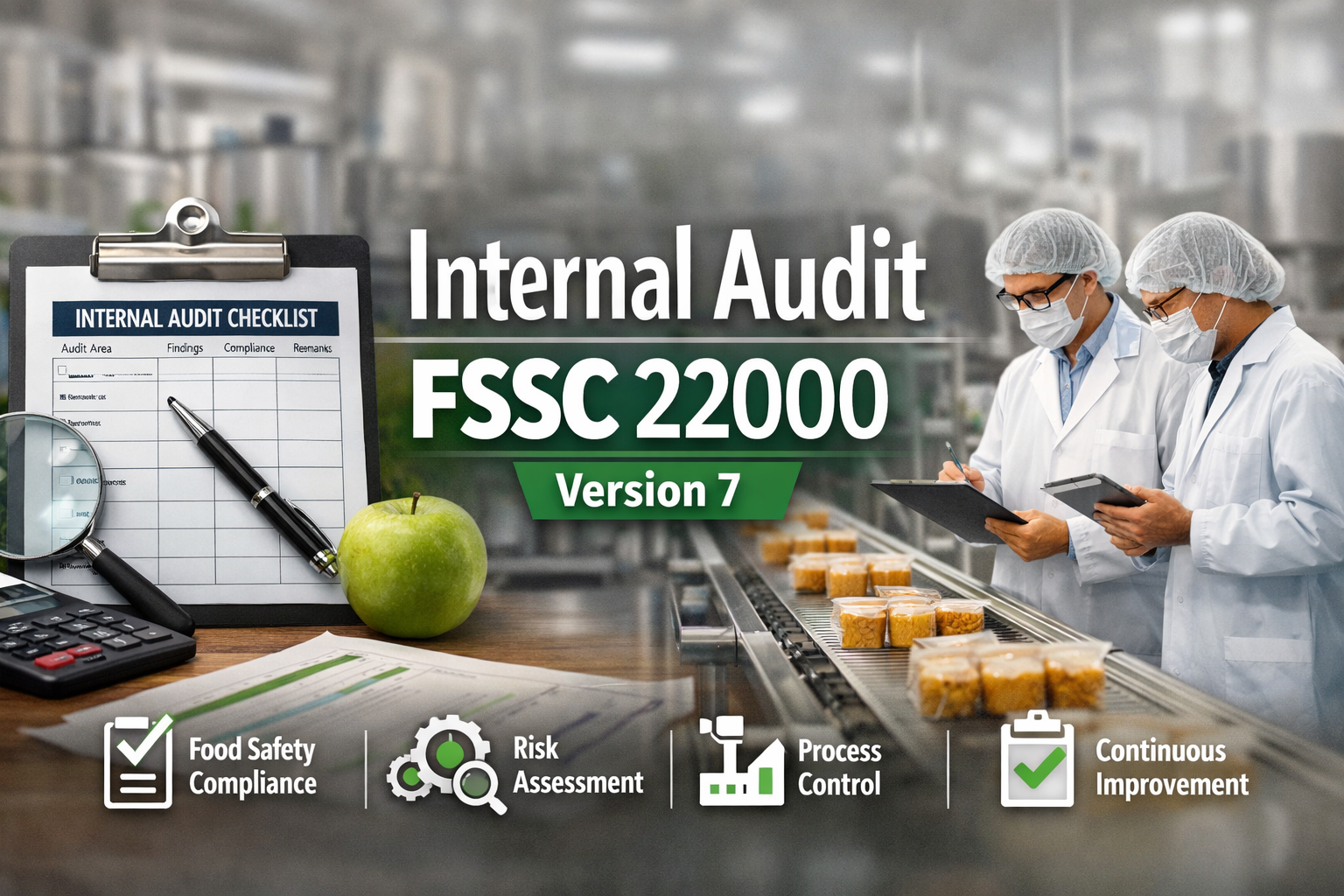
Why Internal Audits Must Be Updated for FSSC 22000 V7
FSSC 22000 Version 7 was officially released in May 2026 and includes major updates aligned with GFSI Benchmarking Requirements, new ISO 22002-x:2025 PRP structure, stronger sustainability and packaging requirements and enhanced auditor competency expectations.
Because of these changes, internal audits can no longer rely solely on older Version 6 audit checklists or procedures. Organizations must now review whether their audit program fully covers the updated scheme requirements.
How to Prepare Your Internal Audit Team for FSSC 22000 V7
Preparing your internal audit team for FSSC 22000 Version 7 is essential to ensure your organization remains compliant with the latest requirements and fully prepared for transition or surveillance audits.
Update Internal Audit Checklists
Your audit team should first review and update existing audit checklists to include all new FSSC 22000 V7 requirements, updated PRPs, food safety culture elements, and risk-based auditing expectations. Using outdated Version 6 checklists may result in missed compliance gaps.
Train Internal Auditors on Version 7 Requirements
Internal auditors should receive proper training on the latest Version 7 updates, including new additional requirements, updated ISO 22002-x:2025 PRPs, food safety culture evaluation and corrective action effectiveness verification. This ensures auditors understand how the new requirements impact audit execution and reporting.
Conduct FSSC 22000 V7 Gap Analysis
Before implementation, the audit team should perform a gap analysis to identify areas where the current Food Safety Management System does not meet Version 7 requirements. This helps prioritize improvements and audit focus areas.
Strengthen Risk-Based Auditing Skills
Auditors should be trained to apply a stronger risk-based approach when planning and conducting audits. High-risk processes, products, and operational areas should receive greater audit attention and frequency.
Review Auditor Competency Records
Organizations should ensure all internal auditors have updated competency records, including relevant training, audit experience, and understanding of FSSC 22000 V7 requirements. Competency evidence may be reviewed during certification audits.
Improve Corrective Action Verification Process
Internal audit teams should focus more on root cause analysis and verifying the effectiveness of corrective actions, rather than simply closing findings. This is a major focus area under Version 7.
Conduct Mock or Transition Audits
Running mock audits or full transition audits before the certification audit helps internal auditors practice the updated requirements and identify remaining compliance gaps early.
Work with Experienced FSSC Consultants
Many organizations choose to work with experienced consultants to accelerate preparation and reduce audit risks. Connext Consulting helps companies update internal audit systems, train auditors, and prepare successfully for FSSC 22000 V7 transition audits.
Common Mistakes Companies Make During Transition
Many organizations underestimate the complexity of upgrading their Food Safety Management System to the latest FSSC requirements. Understanding the 8 common mistakes during FSSC 22000 V7 Transition can help businesses prevent audit failures, implementation delays, and costly nonconformities during certification or transition audits.
Using Old Version 6 Audit Checklists
Many companies continue using outdated internal audit checklists from Version 6, which may not cover new FSSC 22000 Version 7 requirements such as food safety culture, food loss and waste, and updated PRPs.
Failing to Train Internal Auditors
Some organizations do not provide adequate Version 7 training to their internal auditors. Without proper understanding of the new requirements, auditors may overlook critical compliance gaps during audits.
Ignoring Updated ISO 22002-x:2025 PRPs
Companies often underestimate the impact of the updated prerequisite program structure and fail to revise operational controls, hygiene practices, and audit criteria accordingly.
Treating Internal Audits as Documentation Checks Only
Internal audits should evaluate actual implementation and system effectiveness, not just completed documents. Many companies focus too heavily on paperwork while missing operational issues on the production floor.
Weak Corrective Action Verification
Some organizations close audit findings without verifying whether corrective actions are truly effective. Version 7 places stronger emphasis on root cause analysis and prevention of recurring issues.
How Connext Consulting Can Help
Transitioning your internal audit system to FSSC 22000 Version 7 can be challenging, especially with the new PRP structure and enhanced audit requirements.
At Connext Consulting, we help food businesses conduct FSSC 22000 V7 gap analysis, update internal audit systems and checklists, train internal auditors, improve audit readiness and prepare for successful transition audits.
Our team provides practical, audit-focused support to ensure your organization stays compliant with the latest Version 7 requirements. Contact Connext Consulting today to prepare your internal audit system for FSSC 22000 V7 successfully.
FAQs
What changed in FSSC 22000 V7 internal audit requirements?
Version 7 introduces updated PRP requirements, stronger auditor competency expectations, risk-based auditing, and enhanced corrective action verification.
Do internal audit checklists need to be updated for FSSC 22000 V7?
Yes. Old Version 6 checklists may not cover new Version 7 clauses and additional requirements.
Does FSSC 22000 V7 require auditor retraining?
Yes. Internal auditors should be trained on Version 7 requirements, updated PRPs, and new audit expectations.
When should companies transition to FSSC 22000 V7?
Upgrade audits against Version 7 will run from May 2027 to April 2028.