How to Reduce Factory Waste in Malaysia: A Practical Guide for Manufacturers
Factory waste is not just an environmental problem in Malaysia. It is a direct cost, from the raw materials you paid for and threw away to the fees you pay to dispose of it. Reducing waste cuts both, while supporting compliance and sustainability goals. This guide sets out practical ways to reduce factory waste in Malaysia, from source reduction and segregation to using ISO 14001 to make the savings systematic and lasting.
Why Does Reducing Factory Waste Matter in Malaysia?
Reducing factory waste matters in Malaysia because it lowers costs, supports regulatory compliance, and strengthens a company’s sustainability position at the same time. Every tonne of waste represents materials that were bought, handled, and then paid for again at disposal, so cutting it improves margins directly.
There is also a policy backdrop. Malaysia has been working to divert recyclable waste from landfill, with national targets to cut the volume sent to landfill significantly, and buyers and investors increasingly expect suppliers to manage waste responsibly. For manufacturers, waste performance now feeds into ESG assessments and tender evaluations. Add the rising cost of disposal and raw materials, and waste reduction has shifted from a housekeeping nicety to a measurable business advantage. In our ISO 14001 work with Malaysian factories, the biggest savings rarely come from recycling. They come from stopping waste being created in the first place.
What Is the Waste Hierarchy?
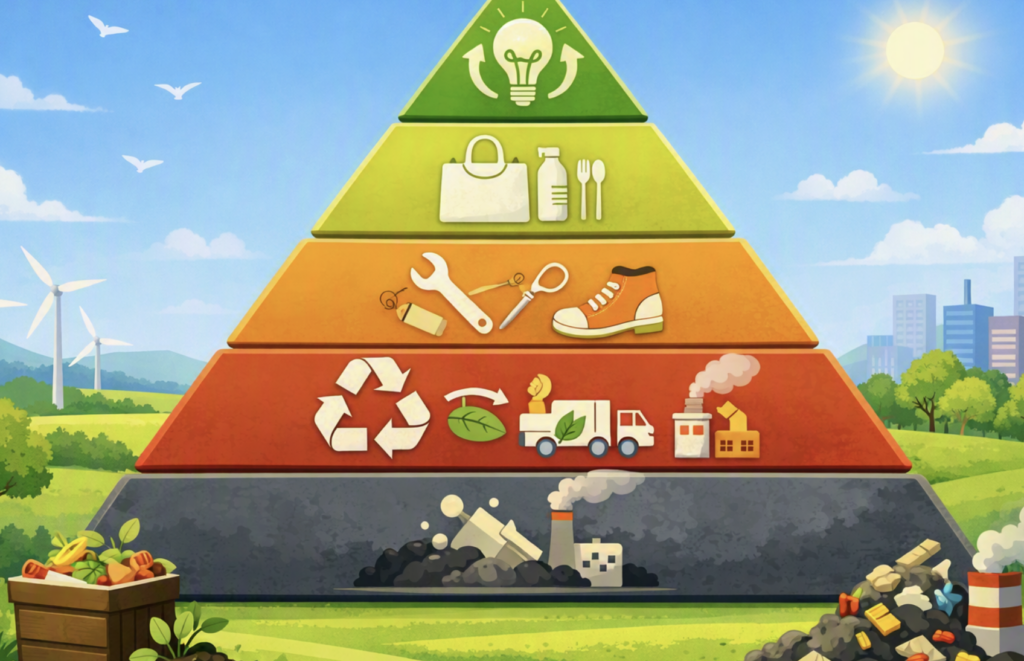
The waste hierarchy ranks waste options from best to worst: reduce first, then reuse, then recycle, then recover energy, and only dispose as a last resort. Reduction sits at the top because avoiding waste entirely is always cheaper than handling it later.
Many factories jump straight to recycling because it is visible and easy to point to, but recycling still consumes energy, labour, and transport, and it only recovers part of the value. Reuse keeps materials in play at higher value, while source reduction eliminates the cost completely. Applying the hierarchy in order, rather than defaulting to recycling, is what separates factories that genuinely cut waste from those that simply move it around. The goal is to climb the hierarchy: push as much waste as possible up toward reduction and reuse, and shrink what falls to disposal.
How Do You Reduce Factory Waste at the Source?
You reduce factory waste at the source by cutting the waste a process creates before it becomes waste at all. This is the highest-value action and usually the cheapest. Practical measures include:
- Cut defects and rework. Every rejected unit is doubled waste: lost material and lost labour. Tightening quality control reduces both.
- Optimise material use. Review cutting patterns, batch sizes, and formulations to use less input material per unit of output.
- Improve housekeeping and maintenance. Leaks, spills, and poorly maintained equipment quietly generate waste that better routines prevent.
- Modify equipment and processes. Upgrading inefficient machinery or adjusting process parameters can sharply reduce offcuts, emissions, and scrap.
- Rethink packaging and inputs. Work with suppliers to reduce incoming packaging and switch to reusable or right-sized materials.
How Do Waste Segregation and Recycling Help?
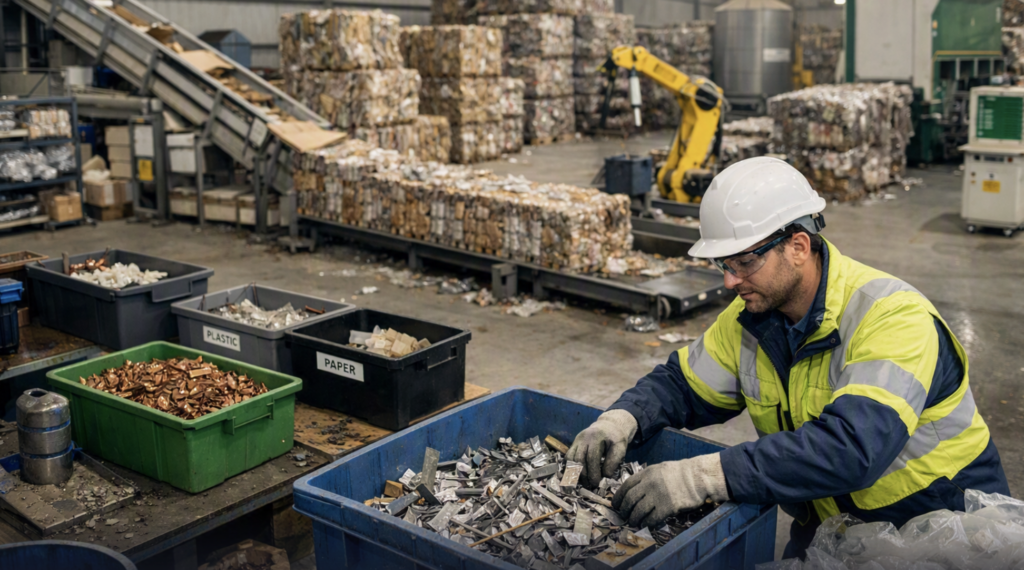
Waste segregation and recycling help by recovering value from the waste that cannot be eliminated, and by keeping recyclable materials clean enough to actually be recycled. The single biggest failure point is contamination: recyclables mixed with general waste usually end up in landfill anyway.
Effective factory recycling is a system, not a bin. It works when a company assigns responsibility for the programme, provides clearly labelled bins at the points where waste is generated, engages a reliable recyclables collector, and trains cleaning staff to keep streams separate during collection. On-site reuse, such as reprocessing offcuts or recirculating water, captures value before material even leaves the site. Regular monitoring keeps the scheme honest and shows where segregation is slipping. Done well, recycling turns a disposal cost into either a saving or, for some materials, a small revenue stream.
How Does ISO 14001 Help Reduce Factory Waste?
ISO 14001 helps reduce factory waste by turning one-off efforts into a managed system with measurable targets. The standard requires a company to identify its significant environmental aspects, which includes every waste stream, then set objectives to reduce them and track performance over time. Waste reduction stops being a good intention and becomes a monitored KPI with management accountability.
Certification to ISO 14001 also builds in the discipline that keeps savings from slipping: documented procedures, internal audits, and continual improvement. It connects waste reduction to wider resource efficiency, helping factories cut costs across materials, energy, and disposal together. One important boundary: hazardous or scheduled waste cannot simply be reduced and recycled like general waste. It must still be stored, labelled, and sent to a licensed facility under Malaysian law, and ISO 14001 helps ensure those legal controls are in place alongside the reduction effort.
What Are the Business Benefits of Reducing Factory Waste?
The main business benefit of reducing factory waste is lower cost, across raw materials, handling, and disposal fees, but the gains extend well beyond the balance sheet. Strong waste performance improves a company’s ESG profile and supports Bursa ESG disclosure, which matters increasingly to customers, lenders, and investors.
Less waste also means a more efficient, better-organised operation, since the same discipline that reduces waste tends to improve productivity and quality. It strengthens tender and supply-chain positioning, as large buyers screen suppliers on environmental performance. And it future-proofs the business against rising disposal costs and tightening regulation. For most Malaysian manufacturers, waste reduction is one of the few initiatives that cuts cost, reduces risk, and improves reputation at the same time.
Stop Waste at the Source, Then Make It Systematic
Reducing factory waste in Malaysia comes down to a simple order of priorities: stop waste at the source first, reuse and recycle what remains, and dispose only as a last resort. Build that thinking into a managed system, and the savings compound year after year rather than fading once the initial push is over. ISO 14001 gives factories the framework to do exactly that, turning scattered efforts into measurable, lasting waste and cost reduction.
Ready to get ISO 14001 certified? Contact Connext for a free consultation.
Frequently Asked Questions About Reducing Factory Waste
How can a factory reduce waste?
A factory reduces waste most effectively by cutting it at the source, through fewer defects, better material use, good housekeeping, and process improvements. Waste that cannot be eliminated should be reused or recycled, with clear segregation to avoid contamination. Disposal should be the last resort, and ISO 14001 helps make these reductions systematic and measurable.
What is the waste hierarchy?
The waste hierarchy ranks waste options from most to least preferable: reduce, reuse, recycle, recover, and dispose. Reduction is best because avoiding waste removes the cost entirely, while disposal is the least desirable and most expensive option. Applying the hierarchy in order helps factories cut waste rather than simply moving it around.
How does ISO 14001 help with waste reduction?
ISO 14001 provides an environmental management system that identifies every waste stream as an environmental aspect, sets reduction objectives, and tracks performance over time. It adds documentation, internal audits, and continual improvement, so waste reduction becomes a monitored target with management accountability rather than a one-off effort.
Is factory waste reduction required by law in Malaysia?
General waste reduction is encouraged rather than strictly mandated, but hazardous or scheduled waste is tightly regulated. Under the Environmental Quality Act 1974, scheduled waste must be stored, labelled, and disposed of through licensed channels. Reducing waste lowers both cost and regulatory exposure, and supports Malaysia’s landfill diversion goals.
Does reducing factory waste save money?
Yes. Reducing factory waste cuts three costs at once: the raw materials that would have been wasted, the labour to handle them, and the fees to dispose of them. Source reduction delivers the biggest savings, while recycling can turn some waste into a saving or a small revenue stream. The savings often outweigh the cost of the improvements.