ISO 14064 Greenhouse Gas Verification Process Explained
If your company reports greenhouse gas (GHG) emissions, whether for Bursa ESG disclosure, investor reporting, or supply chain requirements, you will eventually need to verify those numbers. ISO 14064 is the international standard that governs how GHG inventories are verified by an independent third party. This article explains the greenhouse gas verification process step by step, who conducts it in Malaysia, and how to prepare your organisation.
Before verification, organisations should also complete an Environmental Aspect Assessment to identify activities that contribute to environmental impacts, including greenhouse gas emissions, and establish a reliable foundation for emissions reporting.
What Is ISO 14064 Greenhouse Gas Verification?
ISO 14064 is an international standard that provides a framework for organisations to quantify, monitor, and report their greenhouse gas emissions. It is published by the International Organisation for Standardisation and is structured in three parts:
- ISO 14064-1 sets the rules for how organisations measure and report their Scope 1, Scope 2, and Scope 3 emissions.
- ISO 14064-2 covers GHG emission reduction projects, such as carbon offset programmes.
- ISO 14064-3 sets the requirements for verifying and validating GHG statements. This is the part most relevant to the verification process.
Verification provides independent assurance that your reported emissions are complete, accurate, and consistent with the standard. Without it, your greenhouse gas inventory is unaudited data. In Malaysia, the Bursa Malaysia Sustainability Reporting Guide and the Securities Commission’s sustainable finance frameworks increasingly reference third-party verified GHG data as a credibility requirement for listed companies.
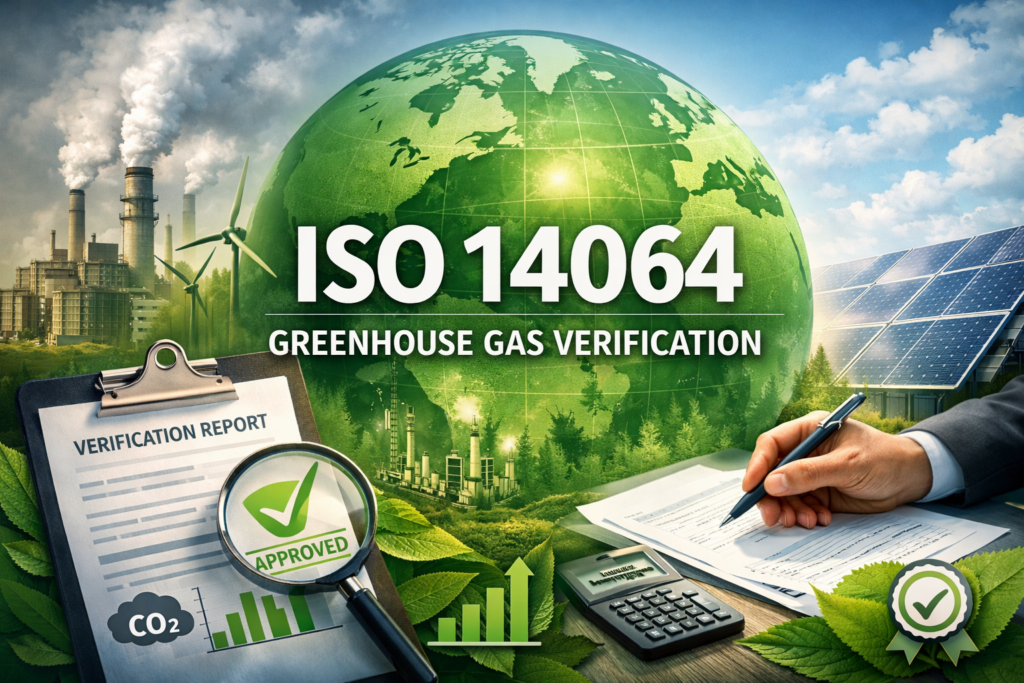
The ISO 14064 Greenhouse Gas Verification Process Step by Step
The ISO 14064 greenhouse gas verification process follows five structured steps. The exact details vary by verification body and scope, but the sequence is consistent across engagements.
- Engagement and Scope Definition. The organisation appoints an accredited verification body and agrees on the scope: which emission sources, which reporting period, and whether reasonable or limited assurance is required.
- Document Review. The verifier reviews your greenhouse gas inventory, data collection methodology, emission factors, and internal records to confirm alignment with ISO 14064-1.
- Site Visit and Evidence Gathering. The verification team visits your premises to inspect physical records, interview staff, and confirm that reported activities match actual operations. This covers utility bills, fuel consumption logs, refrigerant records, and process emissions data.
- Assessment and Non-Conformity Resolution. The verifier identifies material errors, omissions, or misstatements in the greenhouse gas inventory. These findings must be resolved before a verification opinion can be issued.
- Verification Statement Issuance. Once all findings are cleared, the verification body issues a statement confirming the level of assurance achieved. This can be submitted to Bursa, included in sustainability reports, or provided to clients and investors.
Reasonable vs Limited Assurance in ISO 14064 Verification
ISO 14064-3 defines two levels of assurance for greenhouse gas verification. Choosing the right level depends on who you are reporting to and what they require.
Reasonable assurance is a higher level of scrutiny. The verifier conducts a thorough investigation and concludes that the GHG statement is free from material misstatement. It is similar in rigour to a financial audit and is typically required for regulatory submissions or carbon credit claims.
Limited assurance is a lighter review. The verifier checks that nothing has come to their attention to suggest the GHG statement is materially misstated. It is suited to voluntary corporate sustainability reporting.
For most Malaysian companies conducting their first carbon footprint audit, limited assurance is the practical starting point. As your GHG reporting matures and external scrutiny increases, you may be expected to move to reasonable assurance.
Who Can Verify Your GHG Inventory in Malaysia?
ISO 14064 verification in Malaysia must be performed by an independent, accredited verification body. Verification bodies typically hold accreditation from the Department of Standards Malaysia (DSM) or from international accreditation bodies recognised under multilateral agreements. Bodies operating in Malaysia include SGS, Bureau Veritas, TUV Rheinland, and SIRIM.
The key rule is independence. The consultant who helps you build your greenhouse gas inventory cannot also verify it. When selecting a verifier, consider their sector experience, turnaround time, and whether their accreditation is accepted by the framework you are reporting to, whether that is Bursa, a voluntary carbon registry, or a client requirement.
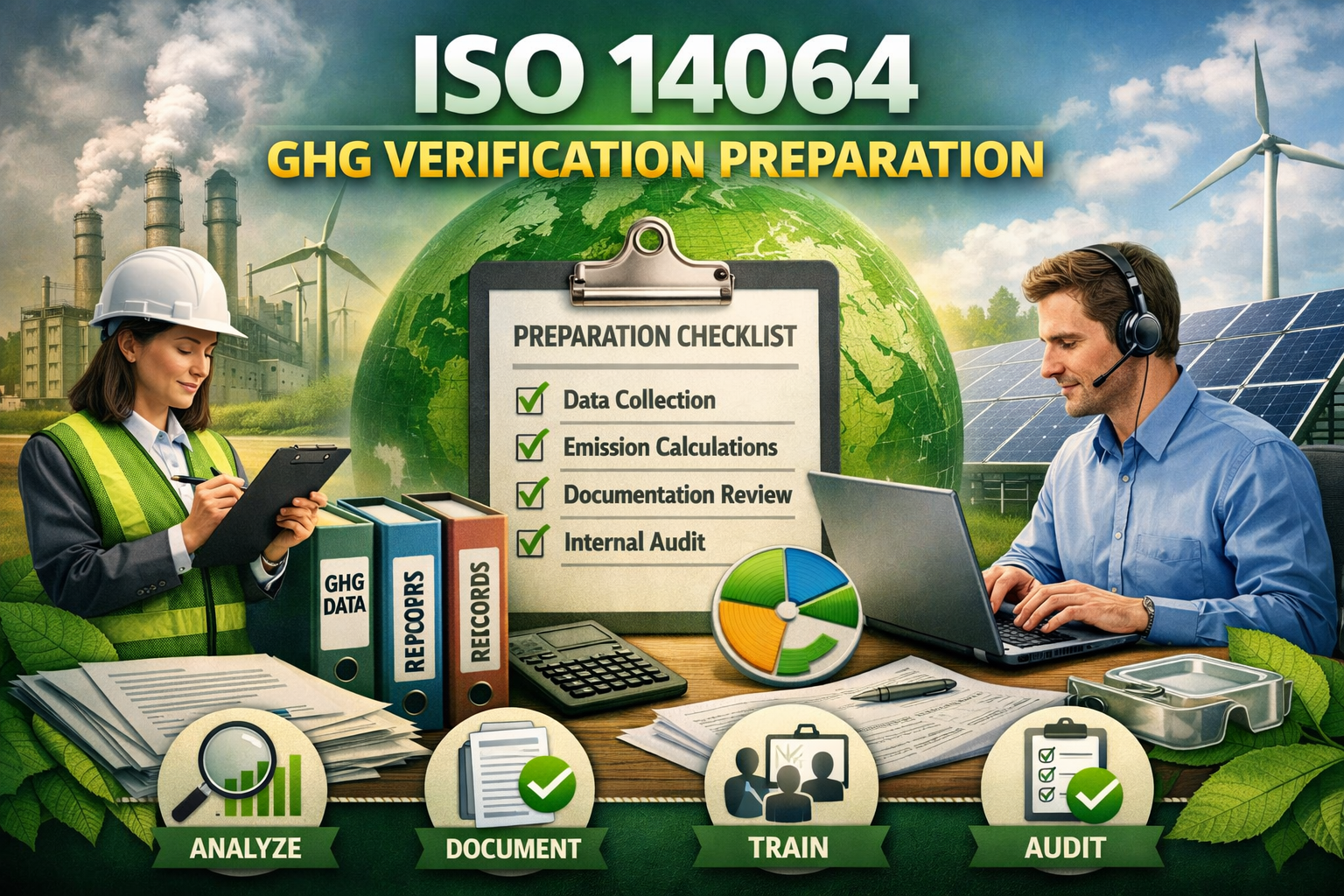
How to Prepare for ISO 14064 GHG Verification
Preparation is the biggest factor in a smooth greenhouse gas verification engagement. Companies that enter verification without complete documentation face delays, additional costs, and re-engagement rounds. Key steps to take before your carbon footprint audit:
- Set your GHG inventory boundary. Define which entities, sites, and emission sources fall under Scope 1, Scope 2, and Scope 3.
- Collect and organise source data. Utility bills, fuel purchase records, refrigerant logs, and fleet mileage should be compiled and tied to the reporting period.
- Document your methodology. Record which emission factors you used, from sources such as the IPCC, IEA, or Malaysia’s published factors, why they were selected, and any assumptions made.
- Run an internal review. Check your own greenhouse gas inventory for gaps, inconsistencies, or data quality issues before the verifier sees it.
- Assign one internal coordinator. Verification involves multiple rounds of document requests. One dedicated point of contact speeds the process up significantly.
Companies that work with an experienced ISO 14064 consultant during the inventory preparation phase typically complete greenhouse gas verification faster and with fewer non-conformity findings.
Understanding the differences between ISO 14064 vs GHG Protocol can also help organizations choose the most appropriate framework for greenhouse gas accounting, reporting, and verification based on their business and ESG objectives.
Start Your Greenhouse Gas Verification Journey
Greenhouse gas verification is no longer a large-company concern. As Malaysian regulators, investors, and trading partners raise expectations around emissions transparency, more businesses including SMEs will need a verified GHG inventory to stay competitive and compliant. Understanding the ISO 14064 verification process is the first step.
Start your greenhouse gas verification journey today. Talk to Connext now.
Frequently Asked Questions About ISO 14064 Greenhouse Gas Verification
What is the difference between verification and validation under ISO 14064?
Validation applies to future GHG reduction projects and assesses whether proposed reductions will be achieved. Verification applies to historical GHG inventories and confirms that already-reported emissions are accurate. Most companies need verification, not validation.
How long does ISO 14064 greenhouse gas verification take?
For a small or medium-sized company with well-prepared records, the process takes four to eight weeks from initial engagement to issuance of the verification statement. Larger organisations or those with multiple sites may take longer.
Is ISO 14064 verification mandatory in Malaysia?
It is not universally mandatory, but Bursa Malaysia increasingly expects it for listed companies with significant carbon exposure. It is also required for voluntary carbon markets and some export supply chains involving multinationals with net-zero commitments.
What documents do I need for GHG verification?
You will need your greenhouse gas inventory report, source data such as utility bills, fuel records, and refrigerant logs, methodology documentation, an organisational boundary definition, and evidence of internal controls or review procedures.
What is the difference between ISO 14064-1 and ISO 14064-3?
ISO 14064-1 is the standard your organisation follows to quantify and report GHG emissions. ISO 14064-3 is the standard your verifier follows to audit your GHG statements. You apply ISO 14064-1 to your inventory; your verifier applies ISO 14064-3 to check it.