MOF Registration in Malaysia: How to Qualify and Win Government Tenders
Winning a government tender in Malaysia starts long before the bid. It starts with being registered, compliant, and certified enough to qualify in the first place. Many companies lose tenders not on price, but because they were never eligible to bid. This guide walks through the compliance path to win government tenders, from MOF registration and CIDB grading to the ISO certifications that increasingly decide who wins.
What Do You Need to Win a Government Tender in Malaysia?
To win a government tender in Malaysia, a company must first be registered with the right authority, meet the tender’s mandatory criteria, and submit a competitive, fully compliant bid. For supplies and services, that means registration with the Ministry of Finance (MOF) through the ePerolehan system. For construction and works, it means registration with the Construction Industry Development Board (CIDB) and holding a Government Works Procurement Certificate (SPKK).
Procurement is tiered by value. Purchases up to RM20,000 are direct, quotations (sebut harga) cover RM20,001 to RM500,000, and anything above RM500,000 goes to open tender. Some tenders are also restricted to Bumiputera-status companies. Beyond eligibility, evaluators increasingly score bids on capability and integrity, which is where certifications come in. In our work helping Malaysian companies prepare for tenders, the most common reason for losing is not price. It is a missing certificate or an expired registration that makes the bid non-compliant before it is even evaluated.
How Do You Register with the MOF (Ministry of Finance)?
You register with the MOF through the ePerolehan system, selecting the field codes that match your business activities, because you can only bid for tenders that match your registered codes. MOF registration is the baseline requirement for any company wanting to supply goods or services to the government.
The requirements are specific. You need a valid SSM company registration, a physical business premises with a tenancy agreement and a visible signboard, several months of bank statements showing positive cash flow, and sufficient paid-up capital. Choosing the correct field codes matters, as registering for the wrong codes locks you out of relevant tenders. Registration must be kept current, since an expired MOF certificate disqualifies a bid instantly. Getting this foundation right is what puts a company in the running at all.
What Do Construction Companies Need? CIDB, SPKK and ISO 37001
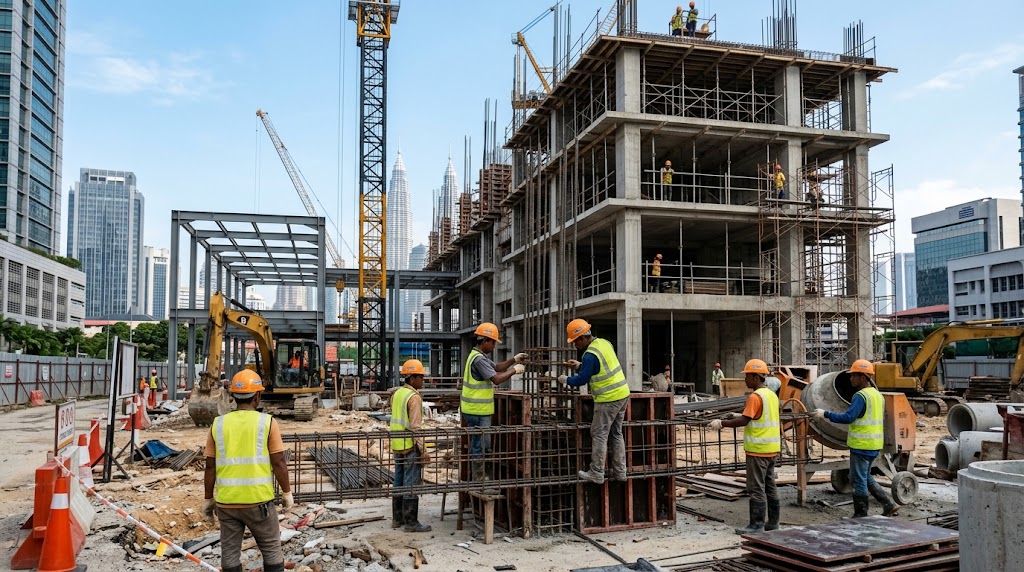
Construction companies need CIDB registration with the right grade, a Contractor Registration Certificate (PPK), and a Government Works Procurement Certificate (SPKK) to bid for public works. CIDB grades run from G1, for projects up to RM250,000, to G7, which has no project value limit, and a company can only tender for work within its grade.
A major change is coming. Under CIDB Pekeliling Bil. 1/2026, ISO 37001 for CIDB G7 contractors becomes mandatory from 1 January 2027: a G7 contractor will not be able to obtain or renew its SPKK without valid ISO 37001 anti-bribery certification. There is no grandfather clause, so existing G7 holders must comply too. Because certification takes several months, contractors aiming to keep their G7 status need to begin well before the deadline. For construction firms, ISO 37001 is shifting from optional to a condition of bidding for government work.
How Do ISO Certifications Help You Win Tenders?
ISO certifications help you win tenders by scoring points in evaluation, signalling capability and integrity, and in some cases meeting mandatory requirements. Government and government-linked buyers increasingly use certifications to separate credible bidders from the rest. ISO 9001 demonstrates a quality management system and consistent delivery, which directly addresses the capability criteria evaluators assess.
Other standards strengthen different aspects of a bid. ISO 37001 shows anti-bribery controls and integrity, ISO 14001 shows environmental responsibility, and ISO 45001 shows occupational safety, all of which appear in tender scoring for relevant sectors. Holding the right certifications can be the difference between two closely priced bids. For many companies, the fastest way to become more competitive is not to cut price, but to close the certification gap. Our guide on how to get ISO certified in Malaysia explains the process.
Why Does Integrity Matter in Government Procurement?
Integrity matters in government procurement because anti-corruption compliance is now built into how tenders are awarded and policed. Many government contracts require bidders to sign an integrity pact, and companies found to have engaged in corruption face blacklisting and prosecution under the MACC Act 2009.
The rules are tightening further. Malaysia’s Government Procurement Act 2025 introduces stronger controls, including measures against the fronting model where a registered company lends its status to another. Demonstrating genuine anti-corruption controls, ideally through ISO 37001 certification, protects a company from disqualification and prosecution while strengthening its standing with procurement bodies. In government procurement, integrity is no longer a soft value. It is a compliance requirement that can decide whether a company is allowed to bid at all.
How Do You Put Together a Winning Tender Bid?
You put together a winning tender bid by meeting every mandatory requirement first, then competing on capability and price. A bid that misses a single mandatory document or criterion is usually disqualified before its price is even considered, so compliance comes before competitiveness.
The practical steps are consistent. Confirm your MOF or CIDB registration is current and covers the right codes or grade. Assemble every required document, including certifications, financials, and track record, and check them against the tender checklist. Price realistically, since the lowest bid does not always win if it looks unsustainable. Present your capability clearly, using ISO certifications and past performance as evidence. Finally, submit complete and on time, as late or incomplete bids are rejected automatically. The companies that win consistently treat tendering as a disciplined, repeatable process, not a scramble at the deadline.
Compliance and Certification Get You to the Front of the Queue
Winning government tenders in Malaysia is a compliance game as much as a commercial one. Register correctly with the MOF or CIDB, hold the right grade and codes, meet every mandatory criterion, and back your bid with the certifications that evaluators now expect. The companies that invest in this foundation, especially in ISO certifications like ISO 9001 and ISO 37001, qualify for more tenders and win a higher share of them. In a competitive field, being fully compliant and certified is what gets you to the front of the queue.
Ready to strengthen your tender bids with ISO certification? Contact Connext for a free consultation.
Frequently Asked Questions About Government Tenders in Malaysia
How do I register to bid for government tenders in Malaysia?
To bid for supplies and services, register with the Ministry of Finance (MOF) through the ePerolehan system, selecting field codes that match your activities. For construction, register with CIDB for the right grade and obtain a Government Works Procurement Certificate (SPKK). You can only bid for tenders that match your registration.
What are the requirements for MOF registration?
MOF registration requires a valid SSM company registration, a physical business premises with a tenancy agreement and signboard, several months of bank statements showing positive cash flow, sufficient paid-up capital, and the correct field codes for your activities. The registration must be kept current, as an expired certificate disqualifies your bid.
Is ISO certification required to win government tenders in Malaysia?
It depends on the tender. ISO certification is not always mandatory, but it is increasingly used in evaluation scoring and is sometimes required. From 1 January 2027, ISO 37001 becomes mandatory for CIDB G7 contractors. Certifications like ISO 9001 and ISO 37001 strengthen bids by demonstrating capability and integrity.
What is SPKK and who needs it?
SPKK, the Government Works Procurement Certificate (Sijil Perolehan Kerja Kerajaan), is required for contractors bidding on government construction and works projects. It is issued alongside CIDB registration and the appropriate grade. From 2027, valid ISO 37001 certification becomes a condition of the SPKK for G7 contractors.
Why do companies get disqualified from government tenders?
The most common reason for disqualification is non-compliance, such as an expired registration, wrong field codes, a missing mandatory document or certificate, or a late submission. These technical failures remove a bid from consideration before price is assessed. Keeping registrations current and certifications in place prevents most disqualifications.