
HACCP vs ISO 22000: Key Differences Explained (MS 1480:2025 Guide)
Many food businesses in Malaysia struggle to decide between HACCP and ISO 22000 certification. Some companies only need basic food safety compliance, while others require a full Food Safety Management System to meet export, retailer, or international customer requirements.
With the release of MS 1480:2025, Malaysia’s updated HACCP standard now places stronger emphasis on risk-based thinking, verification, documentation, and system effectiveness. This has increased confusion among food manufacturers about whether HACCP alone is enough or if upgrading to ISO 22000 is the better long-term solution. Understanding the difference is important because choosing the wrong system can lead to failed audits, limited market access, higher compliance costs and repeated food safety issues.
This guide explains the latest differences between HACCP and ISO 22000 based on the updated MS 1480:2025 requirements in Malaysia.
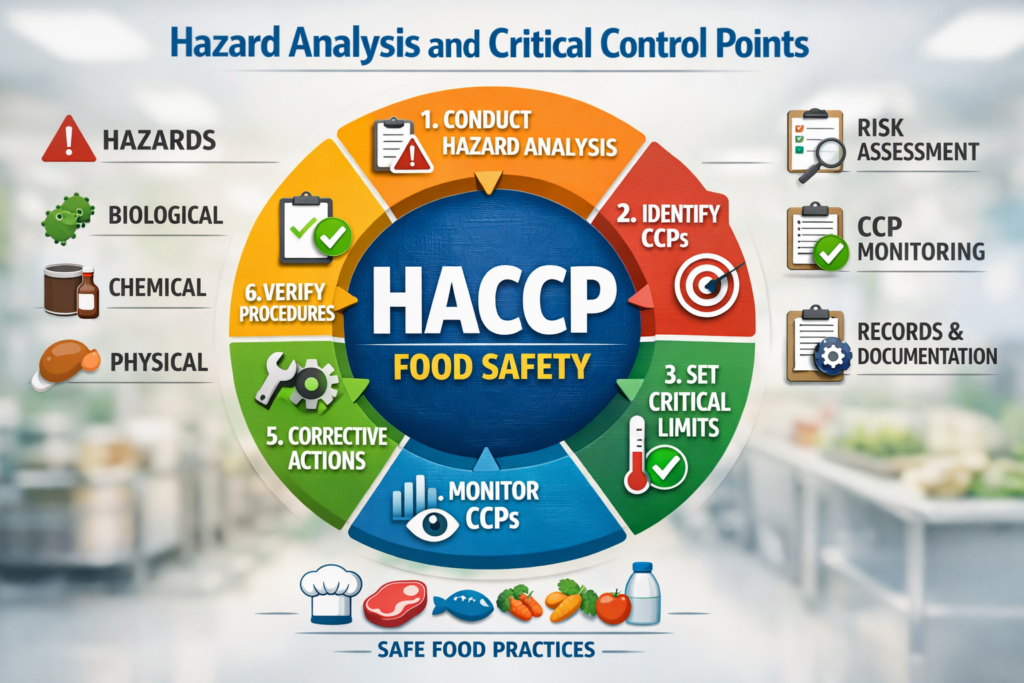
What is HACCP?
HACCP (Hazard Analysis and Critical Control Point) is a food safety methodology focused on identifying, preventing, and controlling hazards during food production. It is designed to ensure food safety by controlling risks at critical points in the process.
In Malaysia, HACCP implementation is guided by MS 1480:2025, the latest revision of the national HACCP standard. The updated version strengthens hazard analysis requirements, CCP justification, validation and verification, risk-based thinking and documentation controls.
HACCP is commonly used by food manufacturers, central kitchens, catering businesses, food packaging companies and storage and distribution providers.
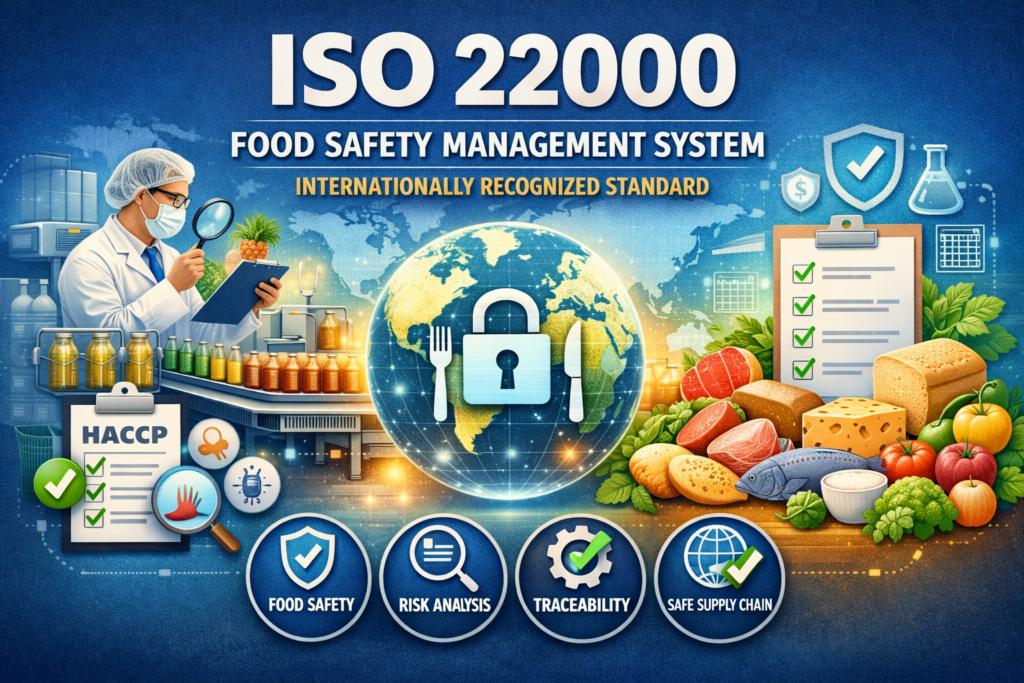
What is ISO 22000?
ISO 22000 is an internationally recognized Food Safety Management System (FSMS) standard. It incorporates HACCP principles but goes beyond hazard control by adding management system framework, leadership responsibilities, risk management, internal audits, continuous improvement and supply chain communication.
ISO 22000 is designed for organizations across the entire food chain, including manufacturers, logistics providers, packaging companies, and exporters.
Key Differences Between HACCP and ISO 22000
Although HACCP and ISO 22000 are both focused on food safety, they differ significantly in scope, structure, and implementation approach.
HACCP primarily focuses on identifying and controlling food safety hazards during production processes. It is a methodology designed to prevent contamination by establishing Critical Control Points (CCPs) and monitoring procedures. Under the updated MS 1480:2025 requirements, HACCP now places stronger emphasis on hazard analysis, validation, verification, and risk-based thinking, making it more structured than previous versions. Many businesses also ask does HACCP means halal, but HACCP is actually a food safety management system and not a halal certification standard.
ISO 22000, on the other hand, is a complete Food Safety Management System (FSMS) that incorporates HACCP principles while adding broader management system requirements. In addition to food hazard control, ISO 22000 includes leadership involvement, organizational risk management, internal audits, communication processes, performance evaluation, and continuous improvement.
Another major difference is international recognition. HACCP is commonly used for local regulatory compliance and customer requirements, while ISO 22000 is globally recognized and often preferred by multinational companies, exporters, and large supply chains. Businesses aiming to expand internationally or supply major brands usually choose ISO 22000 because it demonstrates a more comprehensive and systematic approach to food safety management.
Documentation and implementation requirements also differ. HACCP systems are generally simpler and more operationally focused, while ISO 22000 requires more extensive documentation, management involvement, and system monitoring across the entire organization.
In simple terms, HACCP focuses mainly on controlling food safety hazards, while ISO 22000 focuses on managing the entire food safety system strategically and continuously across the business.
MS 1480:2025: What Changed in HACCP?
The new MS 1480:2025 revision introduces major updates to Malaysia’s HACCP requirements. Key changes include:
Stronger Hazard Analysis
Companies must now justify hazard significance more clearly instead of relying on generic templates.
Better Alignment with Codex & ISO Systems
The updated structure aligns more closely with international food safety management approaches.
Enhanced Verification & Validation
Organizations must demonstrate evidence that control measures actually work effectively.
Greater Focus on Continuous Improvement
HACCP is now expected to function as a continuously improving system not just a static compliance document.
Expanded Scope Across Food Chain
MS 1480:2025 now explicitly includes packaging, storage, distribution, retail and transport operations.
MS 1480 vs ISO 22000: Which One Should Your Business Choose?
Choose HACCP if:
- You operate mainly in local markets and planning to export
- You need basic food safety compliance
- Your customers only require HACCP
- You are a smaller food business
Choose ISO 22000 if:
- You export products internationally
- You supply major retailers or global brands
- You need stronger system management
- You plan to scale operations
To conclude, choose MS 1480 (HACCP) if your business needs basic food safety compliance for local operations and simpler hazard control requirements. Choose ISO 22000 if your business requires international recognition, stronger food safety management systems, export readiness, or compliance with global customer and retailer requirements.
Benefits of ISO 22000 Over HACCP
Stronger International Recognition
Unlike HACCP, ISO 22000 is internationally recognized and widely accepted by multinational companies, exporters, and global retailers. This makes it more suitable for businesses planning to expand into international markets or work with larger customers.
More Complete Food Safety Management System
HACCP mainly focuses on controlling food safety hazards during production, while ISO 22000 covers the entire Food Safety Management System (FSMS). It includes leadership involvement, risk management, communication processes, internal audits, and continuous improvement, creating a more structured and systematic approach.
Better Risk Management
ISO 22000 introduces stronger risk-based thinking beyond just food hazards. It helps businesses identify operational risks, improve preventive controls, and maintain more stable food safety performance across the organization.
Easier Integration with Other ISO Standards
ISO 22000 can be easily integrated with standards such as ISO 9001, ISO 14001, and FSSC 22000. This allows companies to build a more efficient and unified management system.
Improved Customer Confidence
Having ISO 22000 certification demonstrates a higher level of commitment to food safety, compliance, and continuous improvement. This helps strengthen customer trust and improves business credibility.
Conclusion
Choosing between HACCP and ISO 22000 depends on your business size, customer requirements, and long-term goals. With the latest updates under MS 1480:2025, Malaysian food businesses are now expected to implement more robust and risk-based food safety systems than before. For companies aiming to improve compliance, strengthen customer trust, and prepare for future growth, implementing the right food safety system is critical.
Contact Connext Consulting today to get expert guidance on HACCP, ISO 22000, and food safety certification in Malaysia.
FAQs
Is HACCP the same as ISO 22000?
No. HACCP focuses on food hazard control, while ISO 22000 is a complete food safety management system that includes HACCP principles.
Is MS 1480:2025 mandatory in Malaysia?
Businesses certified under HACCP in Malaysia are expected to transition to the updated MS 1480:2025 requirements.
Which is better: HACCP or ISO 22000?
HACCP is suitable for basic food safety compliance, while ISO 22000 is better for businesses requiring international recognition and stronger management systems.