HACCP Verification Vs Validation Explained (MS 1480:2025 Guide)
One of the most common causes of HACCP audit findings is confusion between verification and validation. Many food businesses use these terms interchangeably, but under the latest MS 1480:2025 update, auditors now expect organizations to clearly distinguish between the two processes and provide proper evidence for both.
This is especially important because the revised Malaysian HACCP standard places stronger emphasis on evidence-based food safety controls, risk-based thinking, documented system effectiveness and ongoing monitoring and review. Businesses that fail to understand the importance of HACCP may struggle with audit compliance, food safety risks, and customer confidence. Also, if your HACCP team cannot clearly explain how your controls are validated and verified, your business may face nonconformities during audits.
In this guide, we explain the difference between HACCP verification and validation, how they apply under MS 1480:2025, and what food businesses in Malaysia should do to remain compliant.
What is HACCP Validation?
HACCP validation is the process of proving that a food safety control measure is capable of effectively controlling a hazard before it is fully implemented. In simple terms, validation means “Will this control actually work to prevent or reduce the food safety risk?”
Validation is usually based on scientific evidence, technical references, laboratory studies, regulatory guidelines, or industry best practices. It helps ensure that critical controls such as cooking temperatures, cleaning procedures, metal detection, or storage conditions are effective in controlling hazards like bacteria, allergens, or contamination. For example, if a food manufacturer sets a cooking temperature to eliminate harmful bacteria, the company must have evidence showing that the selected temperature and time are sufficient to make the food safe.
Under the latest MS 1480:2025 requirements, HACCP validation has become more important because businesses are expected to provide documented and evidence-based justification for their food safety controls, not just rely on assumptions or copied HACCP templates.
What is HACCP Verification?
HACCP verification is the process of confirming that your HACCP system is being followed correctly and continues to operate effectively over time. In simple terms, verification means “Are we consistently following the HACCP system correctly?”
Unlike validation, which proves a control measure can work, verification focuses on checking whether the implemented system is actually working in daily operations. This involves reviewing records, conducting inspections, and monitoring activities to ensure food safety procedures are consistently followed.
Common HACCP verification activities include reviewing CCP monitoring records, conducting internal audits, checking corrective actions, equipment calibration, product testing and sampling and hygiene and GMP inspections. Under MS 1480:2025, food businesses are expected to carry out regular verification activities and maintain proper documentation to demonstrate ongoing HACCP effectiveness during audits.
Key Difference Between Verification and Validation
Although HACCP verification and validation are closely related, they serve different purposes within a food safety management system.
HACCP validation focuses on determining whether a control measure is scientifically and technically capable of controlling a food safety hazard before implementation. It is used to prove that the selected process, critical limit, or control method can effectively prevent, eliminate, or reduce risks to an acceptable level.
On the other hand, HACCP verification focuses on confirming that the HACCP system is being consistently followed and remains effective during actual operations. Verification activities ensure that employees are implementing procedures correctly and that controls continue to function as intended over time.
- Validation = proving the control can work
- Verification = proving the system is working
Another major difference is timing. Validation is usually conducted before or during implementation, while verification is performed regularly after implementation through audits, inspections, record reviews, and testing activities.
Under MS 1480:2025, food businesses are expected to clearly distinguish between these two processes and maintain proper evidence for both during HACCP audits.
Why MS 1480:2025 Places More Focus on Verification & Validation
The updated MS 1480:2025 standard places greater emphasis on HACCP verification and validation to ensure food businesses implement food safety systems that are scientifically supported, consistently followed, and effective in real operations.
Reduce Weak or Generic HACCP Systems
Previously, many companies used generic HACCP templates without properly validating whether their controls were suitable for their specific products or processes. MS 1480:2025 now requires stronger technical justification and evidence-based controls.
Ensure Food Safety Controls Actually Work
Validation is now more important because businesses must prove that critical controls such as cooking temperatures, sanitation procedures, allergen controls, and storage conditions are capable of effectively controlling food safety hazards.
Strengthen Ongoing HACCP Effectiveness
Verification requirements have become more structured to ensure businesses continuously monitor and review their HACCP systems through internal audits, record reviews, equipment calibration, product testing, and corrective action verification. This helps confirm the system remains effective over time.
Improve Audit Compliance
Auditors under MS 1480:2025 now focus heavily on whether companies can clearly differentiate between monitoring, verification, and validation activities. Businesses that cannot provide proper evidence may receive audit nonconformities.
Align with International Food Safety Standards
The stronger focus on verification and validation aligns MS 1480:2025 with global food safety standards such as FSSC 22000 and ISO 22000, which emphasize risk-based thinking, scientific justification, and continuous improvement.
Reduce Food Safety Risks & Recalls
Proper verification and validation help businesses detect weaknesses early, reduce contamination risks, and prevent food safety incidents that could lead to recalls, customer complaints, or reputational damage.
Ensure HACCP Teams Understand the System
MS 1480:2025 expects HACCP teams to fully understand why controls are implemented and how they are verified. This improves competency, accountability, and overall food safety culture within the organization.
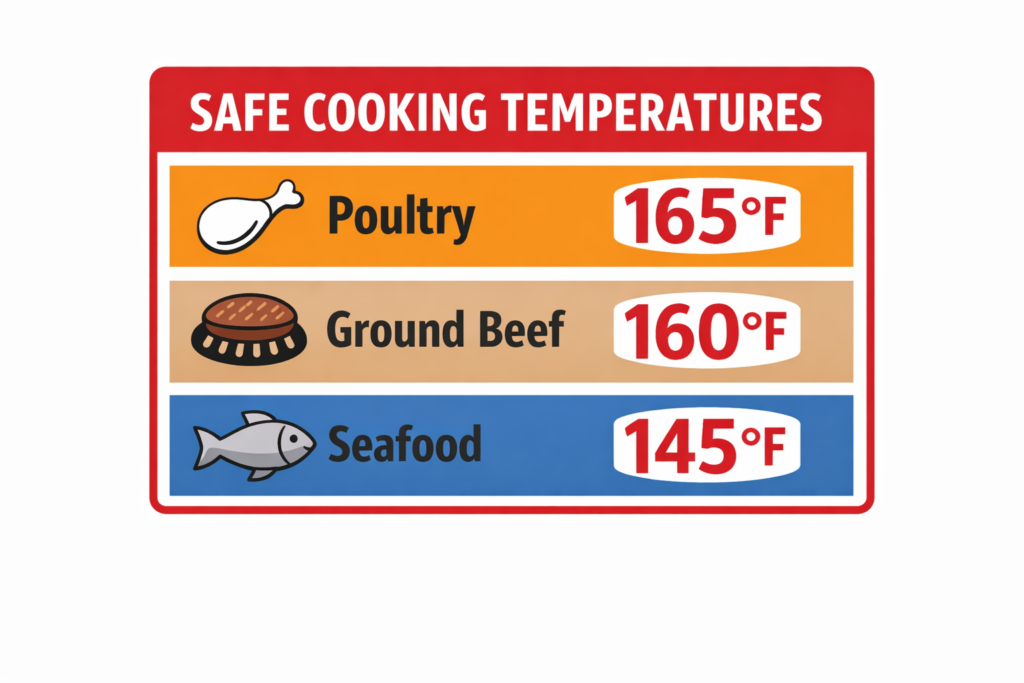
Common HACCP Verification Activities
HACCP verification activities are conducted to confirm that the HACCP system is being consistently followed and remains effective in controlling food safety hazards.
CCP Record Review
Businesses regularly review Critical Control Point (CCP) monitoring records to ensure critical limits are met consistently. For example, reviewing cooking temperature logs daily to confirm all products reached the required safe temperature.
Internal Audits
Internal HACCP audits are conducted to evaluate whether procedures are properly implemented across operations. For example, auditing production staff to verify they follow allergen control procedures correctly.
Equipment Calibration
Verification includes checking whether monitoring equipment remains accurate and reliable. For example, calibrating thermometers monthly to ensure temperature readings are correct.
Product Testing
Food samples may be tested to confirm products meet microbiological or safety requirements. For example, sending finished products to a laboratory for microbiological testing.
Hygiene & GMP Inspections
Routine inspections are carried out to ensure sanitation and hygiene practices are maintained. For example, inspecting handwashing stations and cleaning conditions on the production floor.
Corrective Action Review
Businesses verify whether corrective actions taken for previous issues were effective. For example, reviewing whether retraining staff resolved repeated CCP monitoring errors.
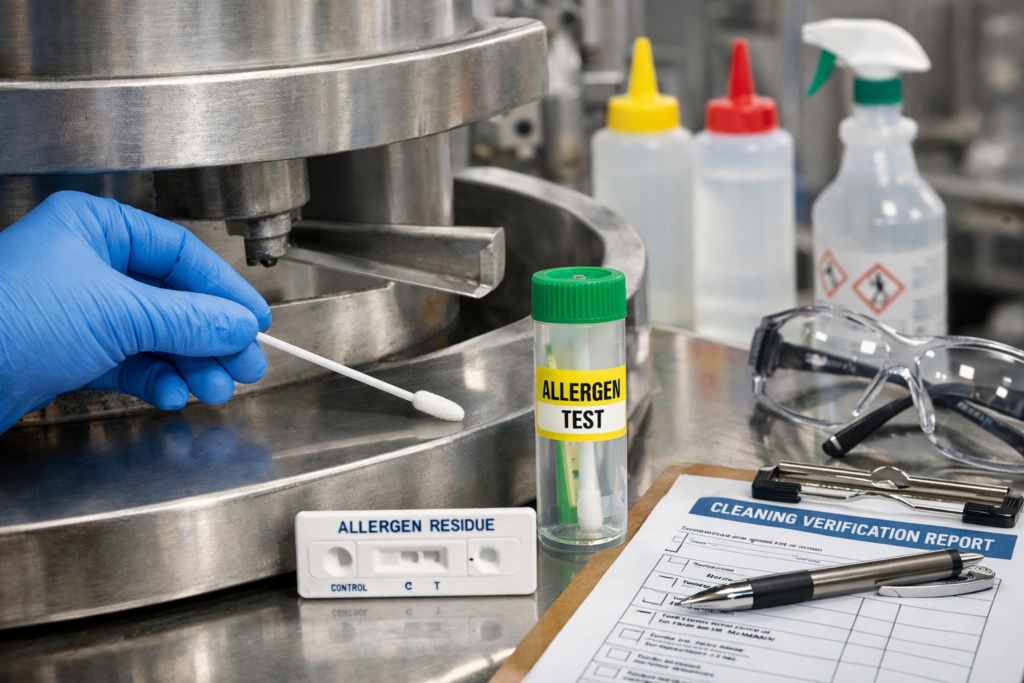
Common HACCP Validation Activities
HACCP validation activities are conducted to prove that a control measure is scientifically capable of controlling a food safety hazard before or during implementation.
Cooking Process Validation
Businesses validate whether cooking temperatures and times are sufficient to eliminate harmful microorganisms. For example, conducting studies to prove cooking chicken at a specific temperature destroys Salmonella.
Cleaning & Sanitation Validation
Validation confirms whether cleaning procedures effectively remove contamination risks. For example, using swab tests to verify cleaning chemicals eliminate allergen residues on equipment.
Metal Detector Validation
Food manufacturers validate whether metal detectors can identify contaminants at required sensitivity levels. For example, testing metal detectors with calibrated metal test pieces before production.
Shelf-Life Validation
Validation ensures products remain safe throughout their intended shelf life. For example, conducting shelf-life studies to confirm refrigerated food remains safe for 7 days.
Validation of Critical Limits
Businesses must validate that selected critical limits effectively control hazards. For example, proving a cold storage temperature below 5°C prevents bacterial growth.
Supplier & Ingredient Validation
Organizations may validate whether suppliers and raw materials meet food safety requirements. For example, reviewing supplier certificates and laboratory analysis before approving ingredients.
How to Improve HACCP Verification & Validation
Strengthening HACCP verification and validation processes is essential to comply with the latest MS 1480:2025 requirements and maintain an effective food safety system.
Conduct Proper Scientific Validation
Food businesses should ensure all critical control measures are supported by scientific or technical evidence. This may include microbiological studies, regulatory guidelines, industry standards, laboratory testing, or expert recommendations to prove that the selected controls can effectively manage food safety hazards.
Establish Structured Verification Schedule
Organizations should create a structured verification program that includes regular internal audits, record reviews, inspections, equipment calibration, and product testing. Having a planned schedule ensures the HACCP system is continuously monitored and remains effective over time.
Train HACCP Team
Employees and HACCP team members must clearly understand the difference between verification and validation. Proper training helps improve system implementation, reduce audit findings, and ensure staff can correctly perform verification and validation activities during daily operations.
Maintain Complete Documentation
All verification and validation evidence should be properly documented and organized. Maintaining complete records helps demonstrate compliance during audits and ensures traceability when reviewing food safety controls or corrective actions.
Review After Operational Changes
Any significant change involving processes, ingredients, suppliers, equipment, packaging, or production flow should trigger a HACCP review. In some cases, businesses may need to perform revalidation to confirm that existing control measures remain effective after the change.
Conclusion
Understanding the difference between HACCP verification and validation is now more important than ever under MS 1480:2025. The updated standard places stronger emphasis on scientific justification, ongoing monitoring, and evidence-based food safety controls. Businesses that fail to properly distinguish between these activities may face audit findings, compliance risks, and weakened food safety performance.
At Connext Consulting, we help food businesses implement practical, compliant, and audit-ready HACCP systems aligned with the latest Malaysian standards. Whether you need HACCP training, system review, or certification support, our consultants are ready to assist. Contact Connext Consulting today to strengthen your HACCP system and prepare confidently for MS 1480:2025 compliance.
FAQs
What is the difference between HACCP verification and validation?
Validation proves a control measure can effectively control hazards, while verification confirms the HACCP system is consistently working as intended.
Is validation required under MS 1480:2025?
Yes. MS 1480:2025 requires organizations to provide evidence that food safety controls are scientifically valid.
What are examples of HACCP validation?
Examples include cooking validation, cleaning validation, shelf-life studies, and validation of critical limits.