Food Hygiene Requirements for Businesses: Complete Guide
Food hygiene is a critical part of running any food-related business. It ensures that food is prepared, handled, and stored in a safe way to prevent contamination and protect consumer health. Whether you operate a restaurant, food manufacturing facility, or catering service, maintaining proper hygiene standards is essential for compliance, customer trust, and business success. In many cases, food hygiene practices are also linked to formal systems such as FSSC 22000 and ISO 22000, which require strict hygiene controls as part of their food safety management systems.
What is Food Hygiene?
Food hygiene refers to all the practices and conditions necessary to ensure food is safe for consumption. It includes proper handling, preparation, storage, and transportation of food to prevent contamination from biological, chemical, or physical hazards. Good food hygiene also involves maintaining clean equipment, proper personal hygiene of staff, and controlling environmental conditions in food production or service areas.
What is the Importance of Food Hygiene?
Food hygiene is important because it ensures that food is safe to eat at every stage of handling, preparation, and storage. Good hygiene practices help prevent contamination from bacteria, viruses, chemicals, and physical hazards that can cause foodborne illnesses. For any food-related business, maintaining proper hygiene is not just about cleanliness, it is a fundamental requirement to protect consumer health and ensure product safety.
Strong food hygiene practices also help businesses comply with regulatory requirements and industry standards, including systems like FSSC 22000 and ISO 22000. These standards require strict hygiene controls as part of a structured food safety management system.
In addition, good food hygiene builds customer trust and protects brand reputation. When consumers feel confident that food is prepared safely, they are more likely to remain loyal to the business. It also reduces the risk of product recalls, legal issues, and financial losses caused by food safety incidents.
In summary, food hygiene is essential for protecting public health, ensuring legal compliance, and supporting long-term business success in the food industry.
How to Practice Food Hygiene (Step-by-Step)
Practicing good food hygiene is essential to ensure food is safe for consumption and to prevent contamination at every stage of handling and preparation.
Step 1: Maintain Personal Hygiene
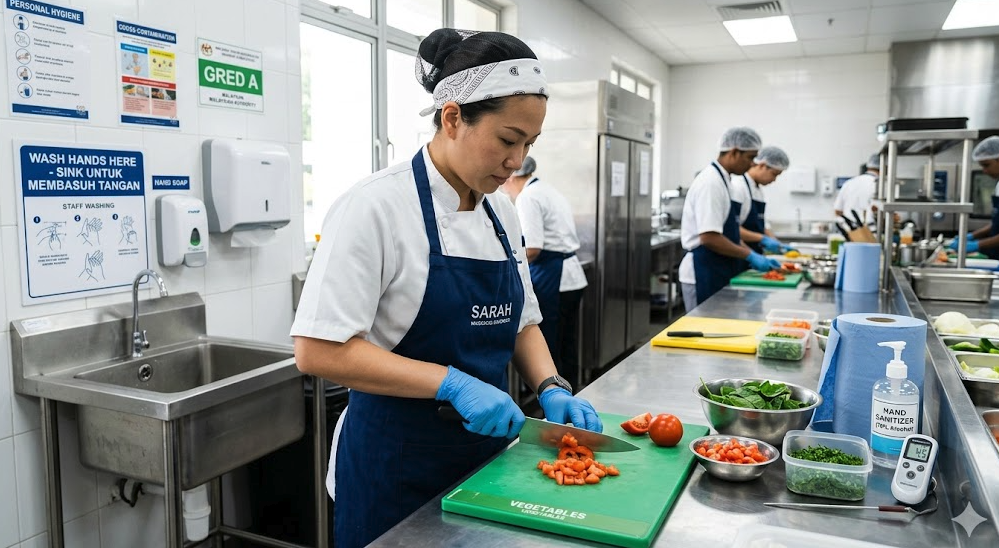
Food handlers must keep themselves clean at all times. This includes washing hands properly before handling food, after using the toilet, after touching raw food, and after handling waste. Wearing clean uniforms, hair restraints, and avoiding jewellery also helps reduce contamination risks.
Step 2: Keep Food Preparation Areas Clean
All food preparation surfaces, utensils, and equipment must be cleaned and sanitised regularly. Work areas should be kept free from dirt, food residues, and pests to prevent cross-contamination and bacterial growth.
Step 3: Store Food at Proper Temperatures
Food must be stored under correct temperature conditions to prevent spoilage and bacterial growth. Refrigerated and frozen items should be monitored regularly, and dry goods should be kept in clean, dry, and well-ventilated storage areas.
Step 4: Prevent Cross-Contamination
Raw and cooked foods should always be separated. Different cutting boards, utensils, and storage containers should be used for raw meat, seafood, and ready-to-eat foods to avoid contamination.
Step 5: Cook Food Thoroughly
Food must be cooked at the correct internal temperature to kill harmful bacteria. Proper cooking procedures should always be followed, especially for meat, poultry, and seafood products.
Step 6: Follow Safe Cleaning and Waste Disposal Practices
Cleaning chemicals should be used correctly and safely, and waste must be disposed of regularly in covered bins. Poor waste management can attract pests and lead to contamination risks.
Step 7: Train Staff Regularly
Employees should receive ongoing food hygiene training to ensure they understand proper handling practices, hygiene standards, and safety procedures. This is especially important in structured systems like FSSC 22000 and ISO 22000, where hygiene control is a key requirement.
Step 8: Monitor and Review Hygiene Practices
Regular inspections and internal checks should be conducted to ensure hygiene practices are consistently followed. Any issues should be corrected immediately through proper corrective actions to maintain food safety standards.
Case Study
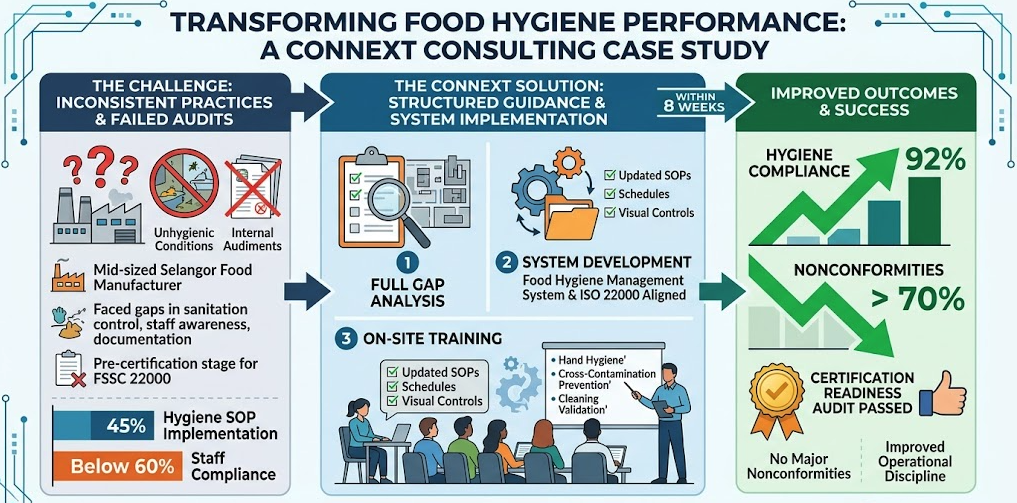
At Connext Consulting, we recently worked with a mid-sized food manufacturing company in Selangor that was struggling with inconsistent food hygiene practices and failed internal audit results. The client was preparing for certification under FSSC 22000, but faced gaps in sanitation control, staff hygiene awareness, and documentation of cleaning procedures.
Our team began with a full gap analysis and identified that only 45% of hygiene SOPs were properly implemented on the production floor, while staff compliance with personal hygiene requirements was below 60% based on internal audit observations. We then developed a structured Food Hygiene Management System aligned with ISO 22000, including updated sanitation procedures, cleaning schedules, and visual hygiene control checklists for operators.
Next, we conducted on-site training sessions for more than 30 employees, focusing on hand hygiene, cross-contamination prevention, and proper cleaning validation practices. Within 8 weeks of implementation, internal audit results improved significantly, with hygiene compliance increasing to 92%, and nonconformities reduced by over 70% compared to the initial audit.
As a result, the client successfully passed their certification readiness audit with no major nonconformities and achieved improved operational discipline across their production line. This case demonstrates how structured guidance, practical training, and system implementation from Connext Consulting can transform food hygiene performance and support successful certification outcomes.
Where to Find Your Food Safety Management System Certificate
If you are unable to locate your Food Safety Management System certificate, the first step is to check your email inbox, certification body portal, or the issuing authority’s online system. Certificates such as FSSC 22000 or ISO 22000 are typically issued digitally after successful audit and certification, and copies are often stored by your certification body or internal compliance team.
However, many businesses face challenges such as misplaced records, expired certificates, or uncertainty about whether their certification scope and validity still meet current compliance or audit requirements.
In situations where certification is required for audits, customer approvals, or regulatory compliance, it is essential to ensure your documentation is complete, up-to-date, and aligned with the latest food safety standards. Missing or outdated certificates can lead to audit non-conformities or delays in business operations.
If you are unsure or facing difficulties in locating, verifying, or maintaining your Food Safety Management System certification, Connext Consulting can support you. We help businesses review their food safety documentation, identify compliance gaps, and ensure alignment with certification requirements so you are fully prepared for audits and inspections.
Is a Food Hygiene Certificate Mandatory?
In most cases, a food hygiene certificate is not legally mandatory for every individual or business, but it is often required in practice depending on your industry, location, and customers.
If a business does not have proper food hygiene certification or trained personnel, it may face challenges such as failed audits, rejection from suppliers or retailers, and increased risk of food safety incidents. While it may not always be a legal requirement, it is often a practical necessity to operate, grow, and comply with customer expectations in the food industry.
If you are unsure whether your business meets the required hygiene standards, needs certification or how to get food certification in Malaysia, Connext Consulting can help assess your situation and guide you through the proper training and compliance process to ensure your business is audit-ready and fully compliant. Contact us today!