How to Pass a Food Hygiene Inspection in Malaysia: The Grade A Checklist
A food hygiene inspection decides the grade displayed on your wall, and that grade is the first thing customers and delivery platforms see. In Malaysia, local authorities and the Ministry of Health inspect food premises against the Food Hygiene Regulations 2009 and assign a grade from A to C. This guide explains how the grading works, what inspectors check, and a practical checklist for how to pass a food hygiene inspection and hold a Grade A.
What Is a Food Hygiene Inspection in Malaysia?
A food hygiene inspection in Malaysia is an assessment by the local authority or the Ministry of Health (MOH) of whether a food premises meets the hygiene standards set out in the Food Hygiene Regulations 2009. Inspectors score the premises across a range of criteria and assign a grade, usually A, B, or C, which the business must display where customers can see it.
This is different from a certification audit such as HACCP or FSSC 22000. A certification audit is voluntary and tests a documented food safety management system. A hygiene inspection is mandatory for any licensed food premises and focuses on the physical state of the premises, the practices of the people working in it, and compliance with the law. Restaurants, cafes, stalls, and home-based food businesses are all subject to it. The inspection can be scheduled or a spot check, and it underpins the grade that appears on your wall and, increasingly, on delivery apps.

How Are Food Premises Graded (A, B, or C)?
Food premises are graded on a scored inspection, where the total score across all hygiene criteria determines the grade: A for excellent, B for good with minor deficiencies, and C for significant deficiencies. Some local authorities also use a no-grade category for premises that fail outright and must clean up before reassessment.
Grade A means strong compliance across the board: clean premises, correct food storage and temperature control, effective pest control, and staff with valid certificates. Grade B signals minor issues that need correction but pose no immediate hazard. Grade C flags serious shortcomings. Pest control carries significant weight, and inspectors are especially sensitive to any live evidence of pests. In practice, a single cockroach or rat sighting can override an otherwise clean premises and trigger closure. Because the grade is displayed publicly, it works as both a regulatory tool and a marketing signal, which is why holding an A matters commercially, not just legally.
What Do Inspectors Check During a Food Hygiene Inspection?
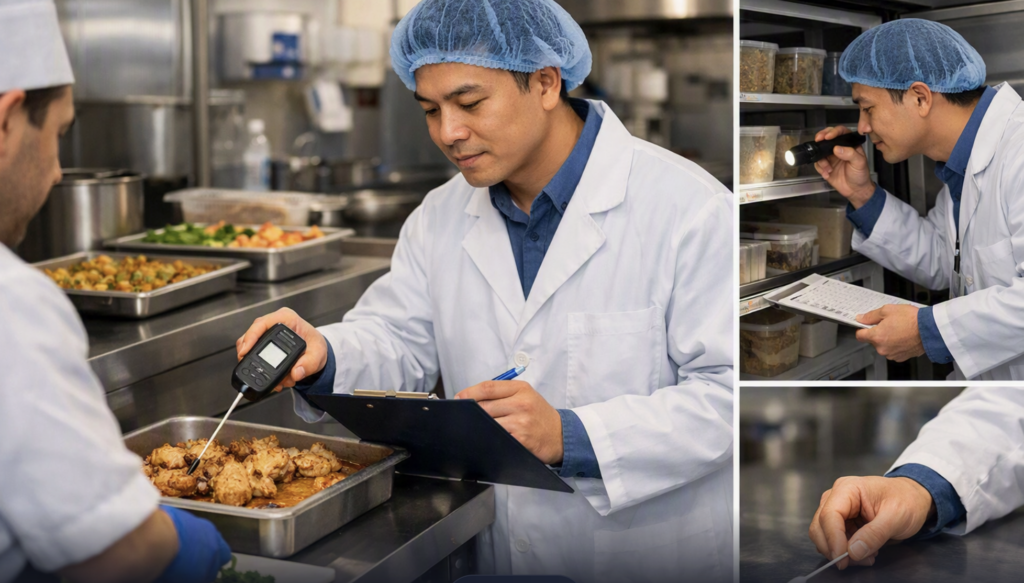
Inspectors check the physical cleanliness of the premises, food storage and temperature control, pest control, waste management, and the hygiene and documentation of every food handler. They look at the state of the kitchen, food contact surfaces, chillers and freezers, dry storage, and the back-of-house areas that operators often neglect.
Specific attention goes to a few recurring points. Raw and ready-to-eat foods must be stored separately and at correct temperatures. There must be no evidence of pests and, ideally, a pest control record. Every food handler must hold a valid MOH-recognised training certificate and a current typhoid vaccination. The premises must be registered in FoSIM, the MOH Food Safety Information System. In our work with Malaysian food businesses, the most common cause of a downgrade is not a dramatic failure but small, repeated lapses: an expired typhoid certificate, a propped-open back door, or uncovered food in the chiller.
How Do You Pass a Food Hygiene Inspection? A Checklist
You pass a food hygiene inspection by keeping the premises, the people, and the paperwork consistently compliant, not by cleaning up the day before. Work through this checklist before any inspection:
- Register the premises in FoSIM and keep your local authority licence current.
- Ensure every food handler holds a valid training certificate and a typhoid vaccination renewed within the last three years.
- Remove all evidence of pests and keep a pest control record, with no gaps at entry points, drains, or storage.
- Keep food contact surfaces, equipment, and floors visibly clean, and maintain a documented cleaning schedule.
- Store raw and ready-to-eat foods separately and at correct temperatures, with chillers and freezers monitored.
- Manage waste properly, with covered bins and no accumulation near food preparation areas.
- Enforce personal hygiene: clean attire, hand-washing facilities stocked, and no unsafe practices on the floor.
What Happens If You Fail a Food Hygiene Inspection?
If you fail a food hygiene inspection, the local authority can issue a compound fine, assign a low grade, or close the premises immediately if pests are found. Closure is most common where inspectors see live cockroaches or rodents, and the operator must clean the entire premises and pass a reassessment before reopening.
Premises given no grade typically have a short window, often around 14 days, to correct the problems before re-inspection. Beyond the legal penalty, the commercial damage is immediate. The grade is displayed at the entrance and often on delivery platforms, so a B or C is visible to every customer who walks past or scrolls by. Repeated failures can escalate to prosecution under the Food Act 1983. The businesses that avoid this treat hygiene as a daily operating standard rather than a scramble triggered by the sight of an inspector.
How Do You Stay Inspection-Ready All Year?
You stay inspection-ready by building hygiene into daily routines so the premises would pass on any given day, not just when an inspection is expected. This means a documented cleaning schedule that is actually followed, routine self-checks against the grading criteria, and regular refreshers so staff sustain personal hygiene and safe food handling.
The stronger the underlying system, the easier every inspection becomes. Adopting prerequisite programmes for sanitation and pest control, and eventually formal HACCP certification as you grow, moves a business from reacting to inspections to controlling food safety by design. For food manufacturers and businesses supplying retailers or planning to export, HACCP under MS 1480:2025 is the natural next step above basic hygiene compliance. Getting the daily discipline right first makes that transition far smoother, because the habits that pass a hygiene inspection are the same habits a certification audit is built on.
A Grade A Is the Result of Daily Habits
Passing a food hygiene inspection comes down to consistency. Keep the premises clean, the food stored and handled correctly, the pests out, and every food handler’s certificate and typhoid vaccination current, all in line with the Food Hygiene Regulations 2009. Do that every day and the grade on your wall takes care of itself. Treat it as a last-minute scramble and the downgrade, or the closure, will eventually catch you out.vNeed help implementing HACCP under MS 1480:2025? Connext can guide you.
FAQs
What is the A, B, C grade for restaurants in Malaysia?
The A, B, C grade is a food premises hygiene rating assigned by the local authority under the Food Hygiene Regulations 2009. Grade A means excellent hygiene, Grade B good with minor deficiencies, and Grade C significant deficiencies. The grade must be displayed at the premises for customers to see.
How often are food premises inspected in Malaysia?
Inspection frequency is not fixed and varies by local authority. Higher-graded premises are typically inspected less often, while premises with no grade or a low grade are re-inspected sooner, sometimes within 14 days after being given time to clean up. Spot checks can happen at any time.
What happens if you fail a food hygiene inspection in Malaysia?
Failing can result in a compound fine, a low grade, or immediate closure if inspectors find pests such as cockroaches or rats. The operator must clean the premises and pass a reassessment before reopening or being upgraded. Because grades are displayed publicly, a poor result also damages customer trust.
What do inspectors check during a food hygiene inspection?
Inspectors check overall cleanliness, food storage and temperature control, pest control and any evidence of pests, waste management, and staff personal hygiene. They also verify that every food handler holds a valid training certificate and typhoid vaccination, and that the premises is registered in FoSIM. Records must match what is observed.
Do all food handlers need a certificate to pass inspection?
Yes. Every person handling food must hold a Ministry of Health-recognised food handler training certificate and a valid typhoid vaccination. Since a 2024 change, the training certificate is valid for life, but the typhoid vaccination must be renewed every three years. Inspectors check these for each handler on site.