
Food Waste in Malaysia: What FSSC 22000 Version 7 Requires and How to Comply
Food waste in Malaysia is a production and certification issue, not just an environmental one. FSSC 22000 Version 7, released on 1 May 2026, elevates food loss and waste management from guidance to a mandatory requirement under Clause 2.5.16. For Malaysian food manufacturers holding or pursuing FSSC 22000 certification, this means documented targets, measurable tracking, and audit-ready evidence of continuous improvement are now non-negotiable. This article explains what Clause 2.5.16 requires, how it changed from Version 6, and what a compliant food loss and waste programme looks like in practice.
What Is Food Loss and Waste, and Why Does FSSC 22000 Address It?
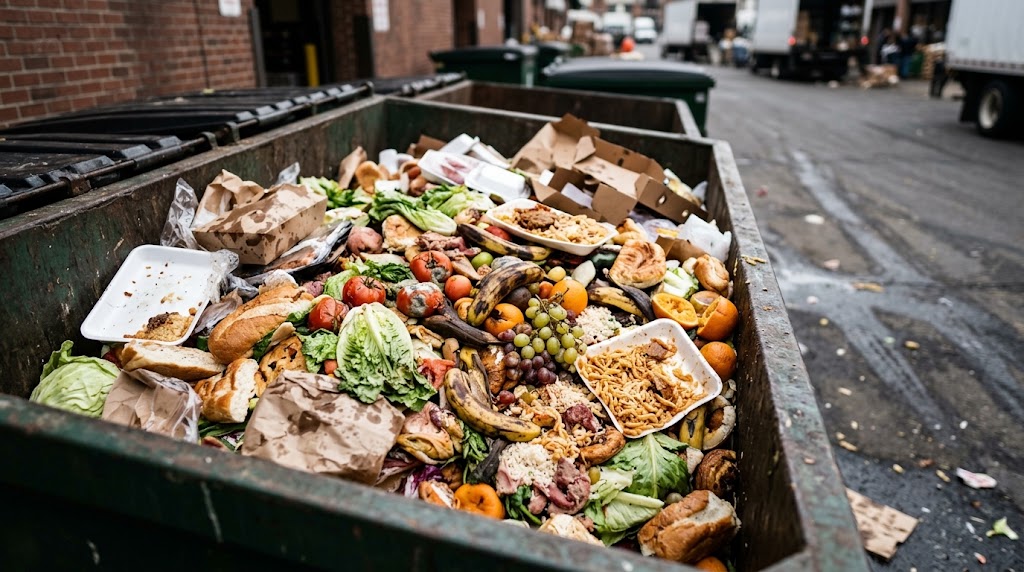
Food loss and waste (FLW) are defined differently under FSSC 22000, and the distinction matters for how you scope your programme. Food loss refers to food that does not reach the consumer because of inefficiencies in production, processing, storage, or distribution. Food waste refers to food that is fit for human consumption but is consciously discarded at the retail or consumer level.
FSSC 22000 addresses food loss and waste because the scheme is aligned to the GFSI 2024 Benchmarking Requirements, which incorporate the UN Sustainable Development Goals. SDG 12.3 targets halving per capita food waste and reducing food losses along production and supply chains by 2030. By embedding FLW management into FSSC 22000 Clause 2.5.16, the scheme creates a direct link between food safety certification and measurable sustainability outcomes.
The scope of the FSSC 22000 food loss and waste requirement covers food products including ingredients, additives, beverages, and pet food intended for human or animal consumption. Pre-harvest losses are excluded because farming falls outside the FSSC 22000 scope. The requirement includes both edible and associated inedible parts removed from the food supply chain, and it extends to rescued or donated food supplied to charitable organisations, provided redistribution is safe, traceable, and compliant with applicable legislation.
What Does FSSC 22000 Version 7 Require for Food Loss and Waste Under Clause 2.5.16?
FSSC 22000 Clause 2.5.16 structures food loss and waste management around three mandatory activities: Target, Measure, and Act. This Target-Measure-Act cycle must be documented and maintained as part of the food safety management system. Evidence of objectives, measurements, and results must be available for review during certification audits. Organisations that have already implemented ISO 22000 will find that the FLW requirement sits above ISO 22000 as an additional FSSC 22000 requirement, consistent with how other Clause 2.5.x requirements operate.
The full list of mandatory requirements under Clause 2.5.16 includes:
- A documented food loss and waste programme with specific, measurable, time-bound objectives covering short-term (quarterly or annual) and long-term (five to ten year) targets
- A baseline quantification of food loss and waste at every point in the production and supply chain where losses occur, from raw material intake through processing, packaging, and distribution
- Root cause analysis for each identified waste stream, distinguishing losses caused by equipment inefficiency, demand forecasting gaps, storage conditions, process design, or product specification issues
- Regular monitoring of both the quantity of food loss and waste and its destination, whether repurposed, recycled, recovered, or disposed of
- Corrective actions when targets are not met, and continuous improvement actions even when targets are achieved
- Evidence that all FLW strategies comply with applicable legislation and do not compromise food safety
- Review of the food loss and waste programme as part of management review, with documented records
How Should a Malaysian Food Manufacturer Set Targets and Measure Food Waste?
Setting meaningful targets under Clause 2.5.16 begins with mapping every point where food loss occurs in your facility. For a Malaysian food manufacturer, this typically includes: raw material rejection at goods receipt, trim and process losses during preparation and portioning, rejects from quality control checkpoints, product damaged during packing or palletising, and expired finished goods destroyed before dispatch.
Measurement must be consistent in method, scope, and frequency so that results are comparable over time and defensible at audit. Stock rotation disciplines such as FIFO (First In, First Out) and FEFO (First Expired, First Out) are not only good manufacturing practice under HACCP; under FSSC 22000 Version 7 they are also part of the control framework for reducing food losses from stock managed past expiry or optimal use date.
Shelf-life validation is also directly relevant. FSSC 22000 Version 7 encourages shelf-life extension within safety limits as a waste reduction mechanism: if a product can be demonstrated to be safe and of acceptable quality at 90 days rather than 60 days, the resulting reduction in premature disposal is a measurable FLW improvement. Any extended shelf-life claim must be supported by validated data, which should already exist as part of your food safety management system.
Where food cannot be prevented or reduced, the FSSC 22000 guidance applies the Food Waste Hierarchy: redistribution to food banks or secondary markets first (if safe and traceable), then animal feed, then composting or energy recovery through anaerobic digestion, and disposal to landfill only as a last resort. Tracking where waste ends up, not just how much is generated, is a specific audit expectation under Clause 2.5.16.
What Sectors and Food Chain Categories Does the FSSC 22000 Food Waste Requirement Cover?
FSSC 22000 Clause 2.5.16 applies to all certified organisations, but the practical implementation varies by food chain category. Malaysian food manufacturers typically fall under Category C (processing of perishable animal products), Category D (processing of perishable plant-based products), or Category E (ambient-stable products). For manufacturing categories, the focus areas under Clause 2.5.16 are:
- Process efficiency: identifying and reducing production losses through equipment calibration, process optimisation, and portion control
- Ingredient management: improving demand forecasting and ordering precision to reduce raw material waste from over-ordering or spoilage in storage
- Downgraded or non-conforming product: establishing documented policies for redirecting non-conforming but safe product to alternative markets rather than direct disposal
- Rework and by-product: maximising recovery of reworkable material and diverting inedible by-products to animal feed or energy recovery rather than landfill
For Malaysian food manufacturers exporting to markets with sustainability reporting requirements, FSSC 22000 Version 7 compliance under Clause 2.5.16 also provides documented data that can be used in ESG reporting and supplier sustainability questionnaires from multinational customers. The measurement records required by Clause 2.5.16 are the same data sets that procurement teams from major global food retailers and food service companies request from their Malaysian suppliers.
How Does FSSC 22000 Version 7 Change the Food Loss and Waste Requirement from Version 6?
The single most significant change in FSSC 22000 Version 7 for food loss and waste is the shift in status: what was guidance in Version 6 is now a mandatory requirement. Under FSSC 22000 Version 6, Clause 2.5.16 provided structured guidance for food loss and waste management, but auditors could not raise a nonconformance against it as a binding requirement. Under Version 7, food loss and waste management under Clause 2.5.16 is enforceable at audit, a certified organisation without documented targets, measurement records, or evidence of the Target-Measure-Act cycle will receive a nonconformance.
The transition timeline for FSSC 22000 Version 7 requires all organisations to complete their upgrade audits before 30 April 2028. Version 6 audits remain valid until 30 April 2027. Organisations whose food safety management systems were designed against Version 6 or earlier should treat the V7 transition as an opportunity to review their FLW programme: confirm documented targets exist, confirm waste is being measured by quantity and destination, and confirm corrective actions are linked to specific root causes rather than generic statements of intent.
In our work with Malaysian food manufacturers preparing for FSSC 22000 certification and re-certification, the most common gap when auditors review food loss and waste programmes is the absence of a baseline. Organisations often have anecdotal awareness that certain process steps generate significant waste but have not quantified the volumes, cannot demonstrate the waste destination trail, and have not set time-bound reduction targets. These gaps, which would not have resulted in a nonconformance under Version 6 guidance, will be cited under Version 7.
Food Loss and Waste Is Now an Audit Requirement, Not a Sustainability Aspiration
FSSC 22000 Version 7 closes the gap between food safety certification and sustainability performance. Malaysian food manufacturers that have not yet built a documented, measurable food loss and waste programme now face a direct certification risk: Clause 2.5.16 is enforceable, targets must be specific and time-bound, and measurement records must be maintained and reviewed.
The manufacturers best positioned for Version 7 transition audits are those that start with a baseline now, map their waste streams by quantity and destination, set realistic short-term targets, and build the corrective action record that auditors will look for. This is also the same data that customers, investors, and export market buyers are increasingly demanding.
Ready to transition to FSSC 22000 Version 7 or implement your food loss and waste programme? Contact Connext for a free consultation.
Frequently Asked Questions
What does FSSC 22000 require for food loss and waste?
FSSC 22000 Version 7 requires a documented food loss and waste programme under Clause 2.5.16 with specific, measurable, time-bound objectives, regular measurement of waste quantities and destinations, root cause analysis, corrective actions, and documented review through management review. What was guidance in Version 6 is now a mandatory requirement.
What changed in FSSC 22000 Version 7 for food loss and waste?
The key change in FSSC 22000 Version 7 is that food loss and waste management shifted from guidance (Version 6) to a mandatory, auditable requirement. Organisations without documented targets, baseline measurements, and a Target-Measure-Act cycle can now receive a nonconformance at certification audit.
What is the food waste hierarchy under FSSC 22000?
FSSC 22000 applies a food waste hierarchy: prevention first, then redistribution to food banks or secondary markets (if safe), then animal feed, then composting or energy recovery, and landfill disposal only as a last resort. Organisations must track not just how much waste is generated but where it ends up in the hierarchy.
When does FSSC 22000 Version 7 take effect in Malaysia?
FSSC 22000 Version 7 was released on 1 May 2026. Version 6 certification audits remain valid until 30 April 2027. All organisations must complete their Version 7 upgrade audits by 30 April 2028, after which only Version 7 certificates are recognised.
Does food waste reduction under FSSC 22000 support ESG reporting?
Yes. The measurement records required by FSSC 22000 Clause 2.5.16 include waste quantities by category and destination, which directly support ESG reporting and sustainability disclosures. Malaysian food manufacturers exporting to international markets will find that the same data satisfies both FSSC 22000 audit requirements and supplier sustainability questionnaires from global buyers.