Why ISO 37001 Is Becoming Essential for SMEs
In the past, ISO 37001 was mainly associated with large corporations, government-linked companies, and multinational organizations. Today, that is rapidly changing. More SMEs in Malaysia are now implementing ISO 37001 as clients, regulators, and business partners place greater emphasis on transparency, governance, and anti-bribery compliance. For many small and medium-sized businesses, having an anti-bribery system is no longer just about compliance, it is becoming a competitive advantage.
With increasing scrutiny on supply chains, procurement practices, and corporate accountability, SMEs without structured compliance systems may struggle to secure contracts, build trust, or expand into larger markets.
What is ISO 37001?
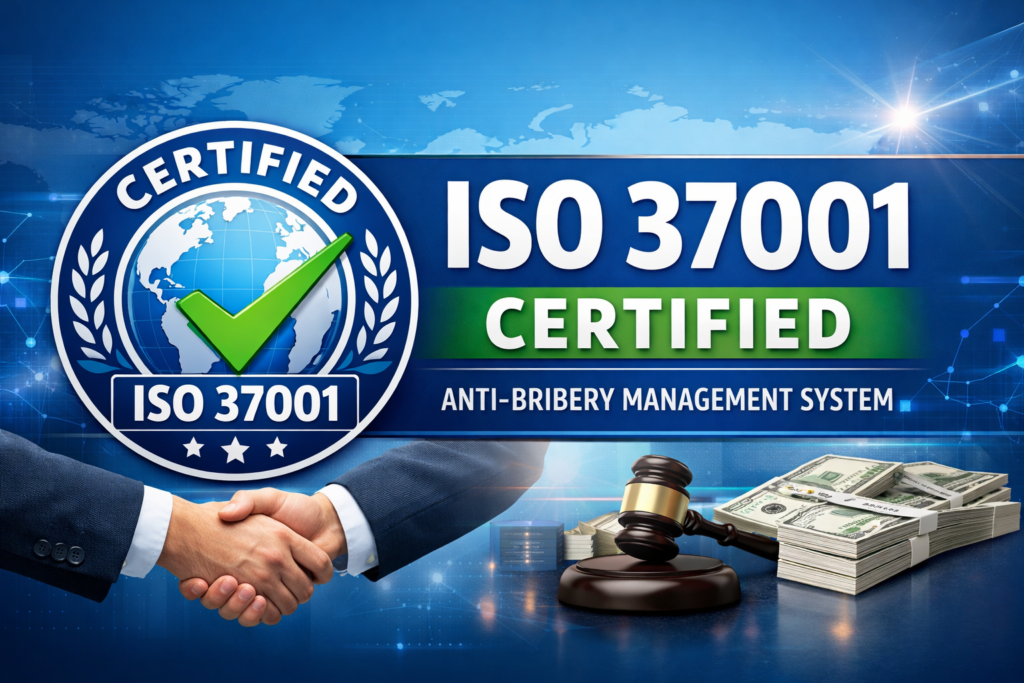
ISO 37001 is the international standard for Anti-Bribery Management Systems (ABMS). It provides a framework for organizations to prevent, detect, and manage bribery risks through policies, controls, due diligence, and employee awareness.
The standard can be applied to organizations of any size, including SMEs, and is increasingly used to demonstrate ethical business practices and compliance readiness.
Why ISO 37001 Is Becoming More Relevant for SMEs
Increasing Client & Supply Chain Requirements
Large corporations and government-linked companies are placing stricter compliance requirements on vendors and suppliers. SMEs that want to participate in larger projects or supply chains are increasingly expected to demonstrate anti-bribery controls and governance systems.
In many industries, ISO 37001 is becoming a preferred requirement during vendor evaluation and tender qualification processes. This is particularly relevant for construction businesses seeking ISO 37001 for CIDB G7 Contractors, where governance, transparency, and anti-corruption compliance are now receiving greater attention during project assessments and approvals.
Stronger Regulatory & Corporate Liability Pressure
Malaysia’s corporate liability provisions under Section 17A of the MACC Act have increased awareness around anti-bribery compliance. Businesses can face serious reputational and financial consequences if proper preventive measures are not in place.
ISO 37001 helps SMEs establish documented procedures and “adequate measures” to reduce bribery risks and strengthen compliance efforts.
SMEs Are More Exposed Than Before
Many SMEs assume anti-bribery risks only affect large companies. In reality, SMEs are often more vulnerable because they typically have fewer internal controls, rely heavily on third parties and subcontractors, lack formal compliance processes and operate with limited governance oversight.
ISO 37001 provides a structured framework to close these gaps and improve business integrity.
Better Business Reputation & Trust
Customers and business partners increasingly prefer working with companies that demonstrate ethical practices and transparency.
For SMEs, ISO 37001 certification helps improve credibility, build stakeholder trust, strengthen brand reputation and differentiate from competitors. This is especially important when entering new markets or working with multinational clients.
Competitive Advantage in Tenders & Contracts
Companies with ISO 37001 certification often stand out during procurement and tender evaluation processes because they demonstrate stronger governance and lower compliance risk.
For SMEs competing against larger companies, this can become a valuable differentiator.
Integration with ESG & Sustainability Expectations
Governance is now a major part of ESG (Environmental, Social, Governance) expectations. The latest ISO 37001:2025 update also introduces stronger emphasis on governance and emerging risks.
As ESG reporting becomes more important, SMEs with formal anti-bribery systems will be better positioned to meet future compliance and investor expectations.

How does ISO 37001 help SMEs win more contracts?
ISO 37001 helps SMEs win more contracts by improving credibility, reducing perceived risk, and meeting client or tender compliance requirements especially for government and large corporate projects.
Many procurement teams today prioritize suppliers who can demonstrate strong governance and anti-bribery controls. When an SME is ISO 37001 certified, it signals that the company has a structured system to prevent corruption, manage risks, and operate transparently. This makes the business more trustworthy compared to non-certified competitors.
In addition, some tenders and pre-qualification processes now either require or strongly favor ISO 37001 certification as part of vendor evaluation. This means SMEs with certification are more likely to pass the initial screening stage and move forward in the bidding process.
Overall, ISO 37001 gives SMEs a competitive advantage, improves tender eligibility, and increases the chances of being selected for high-value contracts.
How SMEs Can Get ISO 37001 Certified
Getting certified to ISO 37001 may seem complex at first, but SMEs can achieve it through a structured and practical step-by-step approach tailored to their size and resources.
Step 1: Gap Analysis
The process begins with a gap analysis, where your current business practices are reviewed against ISO 37001 requirements. This helps identify missing controls in areas such as procurement, approvals, subcontractor management, and compliance procedures so you know exactly what needs improvement.
Step 2: Develop Anti-Bribery Policies & System
Next, SMEs need to develop a simple but effective Anti-Bribery Management System (ABMS). This includes creating policies, defining responsibilities, setting up approval processes, and establishing reporting channels to prevent and manage bribery risks.
Step 3: Implement Controls in Daily Operations
After the system is developed, it must be applied in real business operations. This includes enforcing approval workflows, conducting due diligence on suppliers, and ensuring proper documentation for key decisions, especially in procurement and project activities.
Step 4: Employee Training & Awareness
Employees must be trained on anti-bribery policies, risk awareness, and reporting procedures. This ensures everyone understands their role in maintaining compliance and reducing bribery risks within the organization.
Step 5: Internal Audit & Improvement
Before certification, an internal audit is conducted to evaluate system effectiveness. Any gaps or nonconformities are identified and corrected to ensure the system is fully ready for external assessment.
Step 6: Certification Audit
Finally, an accredited certification body performs the official audit. If the system meets all requirements, the SME is awarded ISO 37001 certification, confirming compliance with international anti-bribery standards.
For many SMEs, implementing ISO 37001 can be challenging due to limited resources and experience. Connext Consulting simplifies the entire process by guiding businesses from gap analysis to certification audit. With practical, step-by-step support, SMEs can achieve compliance faster, reduce errors, and improve audit success rates.
How long does it take SMEs to get ISO 37001 certified?
For most SMEs, achieving ISO 37001 certification typically takes 3 to 6 months, depending on the company’s current processes, level of readiness, and internal resources.
If the SME already has some basic compliance structure in place, the process can be faster around 2 to 3 months. However, for companies starting from scratch with no formal policies or controls, it may take up to 6 months to fully implement the system, conduct training, complete internal audits, and pass the certification audit.
The timeline can also be influenced by factors such as employee training speed, documentation readiness, and how quickly gaps identified during implementation are resolved. Companies that work with an experienced consultant usually complete the process faster and with fewer delays. With proper guidance, SMEs can streamline implementation, avoid common mistakes, and achieve certification more efficiently.
Client Story: How Connext Consulting Helped a Malaysian SME Achieve ISO 37001
A growing SME construction and trading company in Malaysia approached Connext Consulting after repeatedly losing tender opportunities due to the absence of an anti-bribery compliance system. Their clients had begun requiring evidence of ISO 37001, but the company had no structured framework in place.
At the start of the project, we conducted a full gap analysis and discovered that the company had informal procurement practices, limited documentation, and no formal bribery risk assessment process. Overall ISO 37001 readiness was estimated at only 35%, with key weaknesses in governance and supplier control.
Connext Consulting then developed a practical and SME-friendly Anti-Bribery Management System (ABMS). Instead of complex procedures, we designed simplified workflows for approvals, supplier onboarding, and procurement controls that fit their daily operations. We also introduced a structured bribery risk assessment model tailored to their project activities.
To strengthen internal understanding, we conducted focused training sessions for management and operational staff, helping them understand real-life scenarios such as tender handling, subcontractor selection, and conflict-of-interest situations. Within just 10 weeks, the company improved its internal compliance readiness to over 90%.
After completing internal audits and corrective actions, the SME successfully passed their ISO 37001 certification audit on the first attempt with zero major nonconformities. This certification immediately strengthened their credibility and improved their success rate in securing new contracts.
This case demonstrates how Connext Consulting helps SMEs in Malaysia transform compliance challenges into business opportunities through practical, efficient, and results-driven ISO 37001 implementation.
Conclusion
As compliance expectations continue to increase, ISO 37001 is no longer just for large corporations. More SMEs are implementing anti-bribery systems to strengthen governance, improve business credibility, and remain competitive in today’s market.
For many businesses, acting early provides a significant advantage especially when dealing with tenders, partnerships, and corporate supply chains that increasingly prioritize compliance and transparency.
At Connext Consulting, we help SMEs implement practical and audit-ready ISO 37001 systems tailored to their business size and industry risks. From gap analysis and documentation to training and certification support, our team guides you through the entire process efficiently and effectively.
Contact Connext Consulting today to start your ISO 37001 certification journey and build a stronger, more trusted business.
FAQs
Is ISO 37001 only for large companies?
No. ISO 37001 is suitable for organizations of all sizes, including SMEs.
Why are SMEs implementing ISO 37001?
To improve compliance, reduce bribery risks, and meet client or tender requirements.
Do SMEs need a consultant for ISO 37001?
Yes. A consultant like Connext Consulting helps simplify implementation, reduce mistakes, and speed up certification.