ISO 14001 for SMEs: Where Should You Start?
For many small and medium-sized enterprises (SMEs), environmental management often feels overwhelming. Business owners are already managing operations, cost control, staffing, and customer demands so implementing an environmental management system may seem like something only large corporations can afford. But that is changing quickly.
Today, more customers, multinational companies, and government projects expect suppliers to demonstrate environmental responsibility. In many industries, having ISO 14001 certification is becoming a competitive advantage rather than just a compliance exercise.
The good news is that ISO 14001 is not only for large organizations. The latest ISO 14001:2026 update was designed to be clearer, easier to implement, and more practical for organizations of all sizes including SMEs. The revised standard also introduces stronger focus on climate change, supply chain management, biodiversity, and measurable environmental performance. So where should SMEs actually begin?
What is ISO 14001?
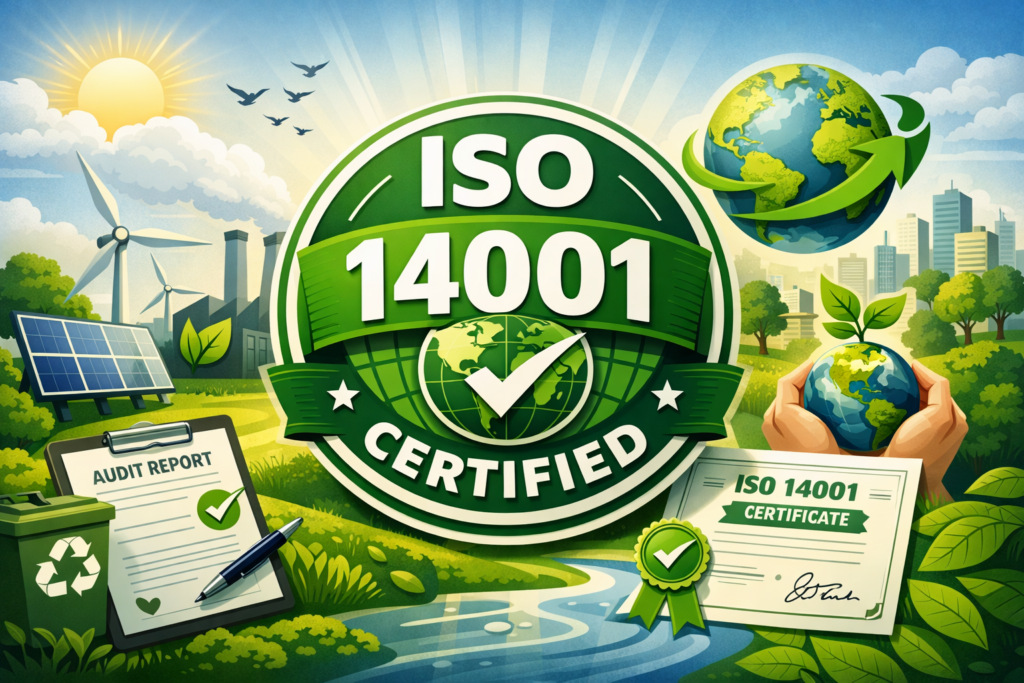
ISO 14001 is the internationally recognized standard for Environmental Management Systems (EMS). It helps businesses identify environmental impacts, manage risks, improve sustainability performance, and comply with environmental regulations.
The standard provides a structured framework for:
- Reducing waste and pollution
- Improving resource efficiency
- Managing environmental risks
- Demonstrating environmental responsibility
ISO 14001 is currently used by more than 670,000 certified organizations worldwide, making it one of the most widely adopted environmental standards globally.
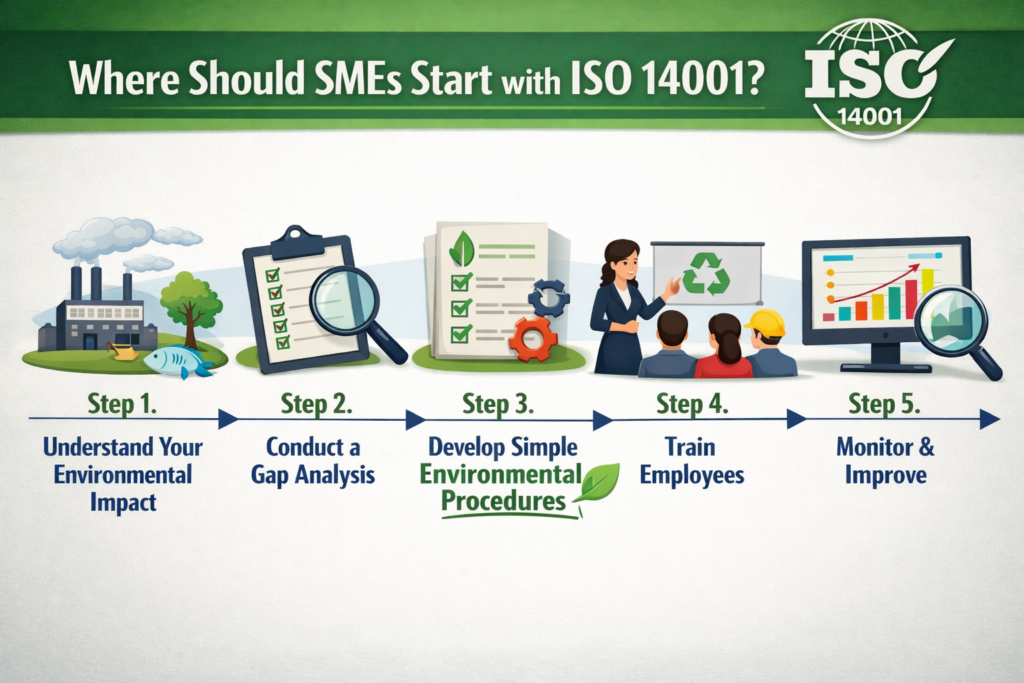
Where Should SMEs Start with ISO 14001?
For SMEs, the best approach is to start simple and build progressively.
Step 1: Understand Your Environmental Impact
The first step is identifying how your business affects the environment. This includes areas such as waste generation, energy usage, water consumption, emissions, and chemical handling. Understanding your environmental impact helps determine which areas need improvement and control.
Step 2: Conduct a Gap Analysis
A gap analysis compares your current practices against ISO 14001 requirements. This helps SMEs identify missing processes, compliance gaps, and areas that need improvement before implementation begins.
Step 3: Develop Simple Environmental Procedures
Many SMEs think ISO 14001 requires excessive documentation. In reality, the system should match the size and complexity of your business. Start with simple procedures for waste management, environmental objectives, emergency response and compliance monitoring. The goal is practicality not paperwork overload.
Step 4: Train Employees
Employee awareness is critical for successful implementation. Staff should understand environmental policies, waste reduction practices, emergency response procedures and their environmental responsibilities. Even small operational improvements can significantly improve environmental performance over time.
Step 5: Monitor & Improve
ISO 14001 is based on continual improvement. SMEs should regularly monitor energy usage, waste reduction, environmental incidents and compliance performance. Tracking results helps businesses identify cost savings and improvement opportunities.
Why SMEs in Malaysia Are Starting ISO 14001 Now
Customer & Supply Chain Pressure
Many multinational companies and large corporations now prefer or require suppliers to have an Environmental Management System (EMS). SMEs are increasingly expected to demonstrate environmental compliance to secure contracts and remain competitive.
ESG & Environmental Compliance
Environmental regulations and ESG expectations are becoming stricter. The latest ISO 14001:2026 update also places stronger focus on climate change, supply chain management, and environmental performance.
Cost Reduction & Efficiency
ISO 14001 helps SMEs reduce waste, improve energy efficiency, and optimize resource usage, leading to lower operational costs over time.
Better Tender Opportunities
Many tenders and corporate projects favor environmentally responsible suppliers. ISO 14001 certification helps SMEs improve credibility and competitiveness.
Stronger Business Reputation
Customers and stakeholders are becoming more environmentally conscious. ISO 14001 helps businesses build trust and demonstrate sustainability commitment.
Benefits of ISO 14001 for SMEs
Implementing ISO 14001 can provide significant long-term benefits for SMEs.
Reduced Operational Costs
One of the biggest benefits of ISO 14001 is improved operational efficiency. By identifying areas of excessive energy usage, material waste, and inefficient processes, SMEs can significantly reduce operating costs over time.
For example, a manufacturing SME may discover through environmental monitoring that certain machines consume excessive electricity during non-production hours. After implementing energy control procedures under ISO 14001, the company could reduce monthly electricity costs and improve overall efficiency. Similarly, businesses that improve waste segregation and recycling practices often lower disposal costs while reducing environmental impact at the same time.
Better Tender & Business Opportunities
Many large corporations, multinational companies, and government projects prefer suppliers with environmental management systems in place. Having ISO 14001 certification helps SMEs become more competitive during supplier evaluations and tender applications.
Improved Compliance & Risk Management
ISO 14001 helps businesses identify environmental risks early and manage them systematically. This reduces the risk of non-compliance, fines, pollution incidents, or operational disruptions.
Stronger Customer Trust & Brand Reputation
Consumers and business partners are becoming more environmentally conscious. Companies that demonstrate sustainability commitment often build stronger trust and credibility in the market.
Improved Resource Efficiency
ISO 14001 encourages businesses to use resources more efficiently, including water, raw materials, and energy. This not only supports sustainability goals but also improves long-term profitability.
How Long Does ISO 14001 Implementation Take for SMEs?
For most SMEs, ISO 14001 implementation typically takes between 2 to 6 months, depending on the company size, operational complexity, existing processes, and readiness level. Smaller businesses with basic environmental controls may complete implementation faster, while companies with multiple departments, production lines, or compliance gaps may require more time. The timeline usually includes gap analysis, documentation development, employee training, system implementation, internal audits, and certification audit preparation. Working with an experienced consultant can also help SMEs speed up the implementation process and reduce delays.
How Connext Consulting Helps SMEs
Many SMEs want to implement ISO 14001 but struggle with limited manpower, lack of internal expertise, unclear documentation requirements, and concerns that the process will become too complicated or time-consuming. In many cases, business owners are already managing daily operations and simply do not have the time to study ISO requirements, prepare documents, and coordinate audits on their own. This is where Connext Consulting helps.
We specialize in helping SMEs implement practical and business-friendly Environmental Management Systems without unnecessary complexity. Instead of creating excessive documentation that is difficult to maintain, our approach focuses on building systems that are simple, effective, and audit-ready while fitting your actual business operations.
For example, we recently supported a manufacturing SME in Malaysia that faced rising customer pressure for environmental compliance but had no structured EMS in place. After conducting a gap analysis, our team simplified their documentation process, implemented practical waste and energy monitoring controls, and trained employees across departments. Within a few months, the company successfully improved operational efficiency and became ready for ISO 14001 certification with minimal disruption to daily operations.
Instead of spending months trying to figure out ISO 14001 alone, many SMEs choose to work with Connext Consulting to save time, reduce stress, and ensure successful certification from the beginning. Contact Connext Consulting today to start your ISO 14001 journey with confidence and build an environmental management system that works for your business.
FAQs
Is ISO 14001 suitable for small businesses?
Yes. ISO 14001 is designed for organizations of all sizes, including SMEs.
Is ISO 14001 mandatory for SMEs?
No, but many customers and tenders increasingly require environmental management compliance.
How long does ISO 14001 implementation take?
Typically between 3–6 months depending on readiness and business complexity.