
What is EHS and Why is It Important?
Workplace accidents, environmental incidents, and regulatory non-compliance cost businesses time, money, and reputation. Many organisations only react after an incident happens. This is where EHS becomes essential.
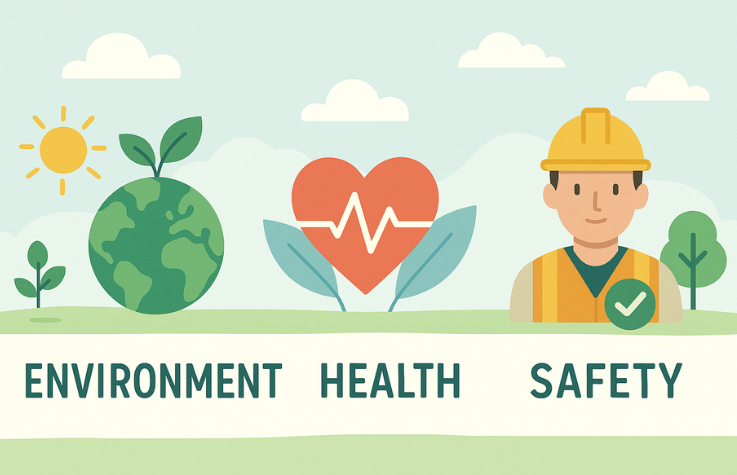
EHS, which stands for Environment, Health, and Safety, is a structured approach that helps organisations identify risks, protect employees, prevent environmental harm, and comply with legal requirements. It is not just a regulatory requirement. It is a management system that supports sustainable and responsible business operations.
For SMEs, EHS provides a practical framework to reduce incidents, avoid penalties, and build trust with customers, regulators, and business partners.
What is EHS?
EHS Environment Health and Safety refers to the systems, policies, and practices organisations use to protect employees, the environment, and the workplace from harm. EHS focuses on preventing accidents, occupational illnesses, environmental damage, and regulatory violations through structured risk management and compliance.
EHS applies across industries such as manufacturing, food processing, construction, logistics, healthcare, and laboratories, where workplace risks and environmental impacts must be actively controlled.
Why is EHS important?
EHS is important because it protects people, the business, and the environment. Poor EHS control can lead to workplace injuries, environmental pollution, legal penalties, and reputational damage.
For example, inadequate chemical handling procedures may result in employee exposure, production shutdowns, and enforcement action by authorities. Strong EHS systems help organisations comply with laws, reduce incidents, and create a safer, more responsible workplace.
What does EHS do in a company?
EHS functions support the company by identifying hazards, assessing risks, and implementing controls to prevent accidents and environmental harm. This includes workplace safety programs, emergency preparedness, waste management, incident investigation, and regulatory compliance monitoring.
In many organisations, EHS teams also conduct training, internal inspections, and audits to ensure employees follow safe work practices and environmental requirements consistently.
Benefits of EHS
Effective EHS management goes beyond meeting legal requirements. It helps organisations create safer workplaces, reduce business risks, and improve long-term performance. When EHS systems are implemented consistently, they protect employees, minimise environmental impact, and support stable, efficient operations. The benefits below explain why EHS is a critical part of responsible and sustainable business management.
Reduces Workplace Accidents and Injuries
Effective EHS management helps organisations identify hazards early and implement preventive controls. This reduces workplace accidents, lost-time injuries, and health-related incidents, creating a safer working environment for employees and contractors.
Improves Employee Morale and Productivity
When employees feel safe and protected, morale and engagement improve. A strong EHS culture shows that management values employee well-being, which often leads to higher productivity and lower staff turnover.
Lowers Operational Disruptions and Costs
Companies with strong EHS performance experience fewer incidents that cause downtime, equipment damage, or production delays. Reduced accident rates also lead to lower insurance premiums, compensation claims, and unplanned operational costs.
Builds Trust with Customers and Regulators
Consistent EHS performance strengthens trust with customers, regulators, and business partners. Organisations that demonstrate effective safety and environmental controls are viewed as reliable, compliant, and responsible suppliers.
Supports Environmental and Business Sustainability
EHS systems improve environmental performance by reducing waste, controlling emissions, and preventing pollution. This supports long-term business sustainability and demonstrates corporate responsibility to stakeholders and the wider community.
Is EHS the same as HSE?
EHS and HSE are closely related and often used interchangeably. HSE stands for Health, Safety, and Environment, while EHS stands for Environment, Health, and Safety. The difference is mainly the order of words, not the scope. Both terms refer to the same objectives of protecting people, the environment, and the workplace through structured safety and environmental management practices.
Conclusion
EHS Environment Health and Safety is a critical part of modern business operations. It goes beyond legal compliance to protect employees, prevent environmental harm, and support long-term organisational performance. A strong EHS system creates safer workplaces, stronger compliance, and more resilient businesses. Contact us or book a consultation with Connext Consulting to strengthen your EHS framework and align it with international standards such as ISO 45001 and ISO 14001.
FAQs
- What does EHS stand for?
EHS stands for Environment, Health, and Safety. It refers to the systems and practices organisations use to protect employees, the workplace, and the environment. EHS covers occupational safety, employee health, environmental protection, and legal compliance across daily operations. - What is the purpose of EHS?
The purpose of EHS is to prevent workplace injuries, occupational illnesses, and environmental harm. It helps organisations identify risks, implement controls, and comply with safety and environmental regulations while supporting business continuity and responsible operations. - What skills are needed for EHS?
EHS roles require skills in hazard identification, risk assessment, incident investigation, and regulatory compliance. Strong communication skills are essential for training employees and promoting safe behaviour. Audit skills, data analysis, and emergency response planning are also important. - What is the role of EHS?
The role of EHS is to manage safety, health, and environmental risks within an organisation. This includes developing procedures, conducting inspections, investigating incidents, managing environmental impacts, and monitoring legal compliance to support continual improvement. - Is EHS a certification?
EHS is not a certification. It is a management function. However, organisations can obtain EHS-related certifications such as ISO 45001 for occupational health and safety and ISO 14001 for environmental management.